
Mushroom risotto is one of those dishes that feels like a warm hug in a bowl. The way the earthy mushrooms release their umami, mingling with the creamy rice, always makes me pause and savor each bite. It’s simple, honest cooking that lets the ingredients shine, especially when you pay attention to how each mushroom behaves at different stages of cooking.
What draws me in most is the texture—how the mushrooms go from firm and meaty to tender, soaking up the stock and flavors around them. It’s a slow dance of patience, but the end result is a dish that feels both rustic and refined, perfect for a cozy night or when you need a little comfort without fuss.
Focusing on the earthy, umami-rich qualities of mushrooms, this risotto highlights how their texture and flavor evolve through different cooking stages, creating a layered, almost meditative eating experience.
The umami journey of mushrooms
- Cooking this dish always takes me back to autumn evenings in my childhood, when my mom would make mushroom risotto after a long day outside.
- There’s a quiet pride I feel when I watch the mushrooms release their earthy aroma and turn a deep, caramel color—like a small victory in the kitchen.
- I love how the simple act of stirring slowly transforms the rice into something creamy and luxurious, yet still comforting in its rustic honesty.
- Sometimes, I add a splash of white wine just to watch it shimmer and smell like a fleeting moment of celebration.
- This dish reminds me that good things take time—it’s meditative, a small ritual that always leaves me feeling grounded.
The story behind this recipe
Mushroom risotto has always been a dish that grounds me. I remember the first time I made it, I was trying to replicate a rich, earthy flavor I’d had at a small trattoria in Italy. The way the mushrooms soak up the broth and release their deep aroma makes every spoonful feel like a little moment of discovery. It’s not a quick fix—more like a slow, meditative process that rewards patience and attention. Over the years, I’ve tweaked my method, but that core sense of earthy comfort remains. There’s something about the way the mushrooms transform during cooking—going from firm to tender, soaking up all the flavors—that keeps me coming back to this dish, especially in those quiet, chilly evenings when I want something honest and warm.
Mushroom Risotto Trivia
- Mushroom risotto finds its roots in Italy’s northern regions, where foraging for wild mushrooms has been a tradition for centuries.
- The dish’s focus on earthy mushrooms and creamy rice reflects a rustic, farm-to-table approach that has persisted through generations.
- Historically, risotto was a humble peasant dish, made with readily available ingredients like arborio rice and wild fungi, evolving into a beloved comfort food.
Ingredient breakdown
- Mushrooms: I love the earthy, umami punch they deliver—try shiitake or cremini for depth, but don’t skip the wild foraged varieties if you can find them; their aroma is almost smoky and intoxicating.
- Arborio rice: This short-grain rice is the backbone, soaking up broth and releasing a creamy starch; swap with carnaroli if you want a silkier texture, but avoid long-grain—won’t hold the creaminess.
- Vegetable broth: I use homemade whenever possible—it’s richer and fresher, with a deep vegetal aroma. Store-bought works fine—just warm it up before adding to keep the rice cooking evenly.
- White wine: Adds bright acidity and complexity—use a dry, inexpensive wine. If you skip it, add a splash more broth for balance, but you’ll lose that subtle fruity lift.
- Onion: Finely chopped onion builds the savory base, releasing sweet, slightly pungent fumes that mellow as they cook. For a richer flavor, toss in a bit of shallot.
- Parmesan cheese: I always add freshly grated Parm—melts into the risotto, adding a nutty, salty punch. Pecorino or Grana Padano are good swaps if you want a different nuance.
- Butter: A knob stirred in at the end makes everything velvety—if you want dairy-free, try a splash of olive oil, but it won’t have quite that luscious finish.
Spotlight on key ingredients
Mushrooms:
- I love the earthy, umami punch they deliver—try shiitake or cremini for depth, but don’t skip the wild foraged varieties if you can find them; their aroma is almost smoky and intoxicating.
- Arborio rice: This short-grain rice is the backbone, soaking up broth and releasing a creamy starch; swap with carnaroli if you want a silkier texture, but avoid long-grain—won’t hold the creaminess.
Broth and Wine:
- Vegetable broth: I use homemade whenever possible—it’s richer and fresher, with a deep vegetal aroma. Store-bought works fine—just warm it up before adding to keep the rice cooking evenly.
- White wine: Adds bright acidity and complexity—use a dry, inexpensive wine. If you skip it, add a splash more broth for balance, but you’ll lose that subtle fruity lift.
Notes for ingredient swaps
- Dairy-Free: Swap Parmesan for nutritional yeast—adds umami, but less nutty richness.
- Vegan: Use olive oil instead of butter, and skip cheese—still earthy, but less creamy.
- Wild Mushrooms: Fresh foraged varieties boost aroma; dried mushrooms rehydrate and intensify flavor.
- Rice: Carnaroli rice offers a silkier texture; jasmine or long-grain won’t absorb as much but can be a quick fix.
- Broth: Homemade vegetable stock is richer; store-bought works, just warm it first for even cooking.
- Wine: Use dry vermouth or omit for a milder, less tangy profile—still good, just different depth.
- Onion: Shallots lend sweetness; leeks offer a milder, more subtle flavor—skip if you’re out.
Equipment & Tools
- Large heavy-bottomed pan: To sauté mushrooms and cook the risotto evenly without burning.
- Saucepan: To keep the broth warm and ready for gradual addition.
- Ladle: For adding hot broth in controlled amounts.
- Stirring spoon: To continuously stir the risotto, releasing starch and preventing sticking.
- Sharp knife: To chop mushrooms and onions finely.
Step-by-step guide to Mushroom Risotto
- Gather all your equipment: a large heavy-bottomed pan for sautéing and a wide, shallow pan for the risotto. You’ll need a ladle, stirring spoon, and a sharp knife.
- Heat your broth gently in a saucepan, keeping it at a gentle simmer—this will help the rice cook evenly. About 80°C (175°F).
- Clean and chop your mushrooms into bite-sized pieces. If using wild varieties, keep some slices slightly larger for texture contrast.
- In your main pan, melt a tablespoon of butter over medium heat (about 160°C/320°F). Add chopped onion or shallots; cook until translucent and fragrant, about 3–4 minutes.
- Add the mushrooms to the pan. Cook until they release their juices and become tender, about 5–7 minutes. Stir occasionally to prevent sticking.
- Pour in a splash of white wine (about 100ml). Let it cook until mostly evaporated, about 2–3 minutes. Smell the rich aroma of earthy wine mingling with the mushrooms.
- Add the arborio rice to the pan. Stir well to coat each grain with butter and cook for 2 minutes until slightly translucent at the edges.
- Begin adding the warm broth, one ladle at a time. Stir constantly, allowing the rice to absorb the liquid before adding more. Continue until the rice is creamy and just tender, about 18–20 minutes.
- Check the risotto’s consistency: it should be creamy but not soupy; the rice should be al dente with a slight bite. If it’s too stiff, add a little more hot broth.
- Once the rice is cooked, turn off the heat. Stir in a generous handful of grated Parmesan and a knob of butter for richness. Adjust seasoning with salt and pepper.
- Let the risotto rest for 2 minutes covered, then serve immediately. Garnish with fresh herbs or a drizzle of good olive oil if desired.
Serve the risotto immediately, garnished with fresh herbs or a drizzle of olive oil. Rest for 2 minutes under a cloth to settle flavors before plating.
How to Know It’s Done
- Mushrooms are tender, juicy, and caramelized on the edges.
- Risotto is creamy, with each grain holding shape but soaked in flavor.
- The broth is fully absorbed, leaving a velvety, slightly loose consistency.
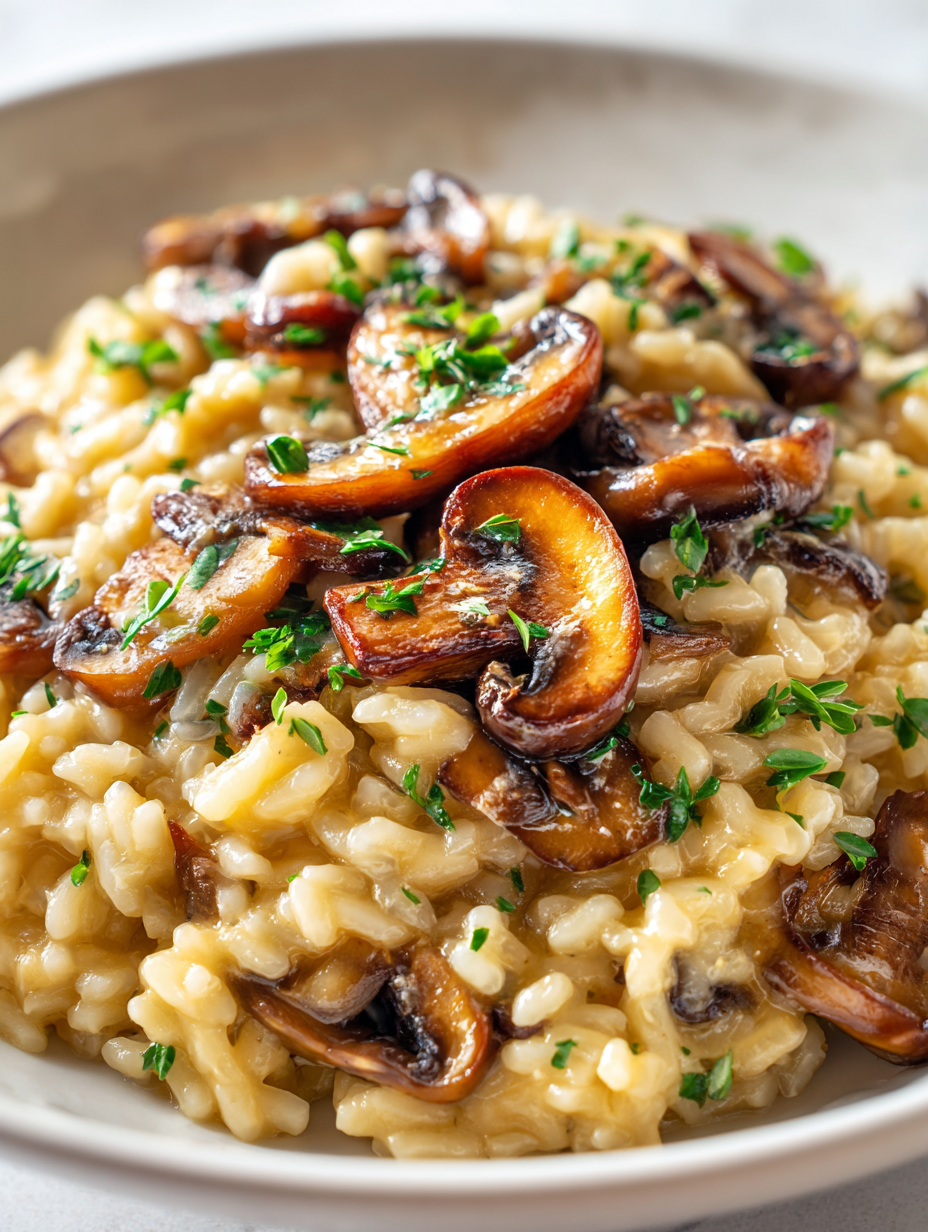
Mushroom Risotto
Ingredients
Equipment
Method
- Start by heating your broth gently in a saucepan and keep it at a gentle simmer to ensure it's ready for gradual addition.
- In your large pan, melt 1 tablespoon of butter over medium heat. Add the finely chopped onion and cook, stirring frequently, until translucent and fragrant, about 3-4 minutes. The onion should become soft and slightly golden.
- Add the sliced mushrooms to the pan. Cook, stirring occasionally, until they release their juices and turn a deep, caramel color, about 5-7 minutes. The aroma will become earthy and inviting.
- Pour in the white wine (if using) and let it simmer until mostly evaporated, about 2-3 minutes. You'll notice the mushrooms soaking up the wine and the mixture smelling rich and aromatic.
- Add the rinsed Arborio rice to the pan. Stir well to coat each grain with the buttery mixture and cook for about 2 minutes until the edges become slightly translucent and the rice starts to toast lightly, releasing a nutty aroma.
- Begin adding the warm broth one ladleful at a time, stirring constantly. Wait until the liquid is mostly absorbed before adding the next ladle. Continue this process, maintaining a gentle simmer, until the rice is creamy, tender but still with a slight bite—about 18-20 minutes.
- Once the rice is cooked to your liking, turn off the heat. Stir in the remaining 1 tablespoon of butter and the grated Parmesan cheese until melted and combined, creating a velvety, rich texture. Adjust seasoning with salt and pepper to taste.
- Let the risotto rest for a couple of minutes, covered, to allow flavors to meld and the texture to settle into a luscious, slightly loose consistency.
- Serve the mushroom risotto hot, garnished with extra Parmesan or fresh herbs if desired, and enjoy the creamy, earthy dish that feels both rustic and refined.
Tips for Perfect Mushroom Risotto
- Bold the rice: Rinse briefly to remove excess starch, then toast for a nutty aroma before adding broth.
- Warm your broth: Keep it at a gentle simmer (around 80°C/175°F) so it incorporates smoothly into the rice.
- Stir constantly: This releases starch, creating that luscious, velvety texture characteristic of good risotto.
- Add broth gradually: Ladle in hot broth little by little, allowing each addition to absorb fully before next.
- Taste for doneness: The rice should be just tender, with a slight bite, and the risotto creamy but not soupy.
- Finish with butter and cheese: Stir in these last for richness and shine, enhancing the earthy mushroom flavors.
- Rest briefly: Let the risotto sit off heat for a couple of minutes to settle and deepen the flavors before serving.
Common mistakes and how to fix them
- FORGOT to stir continuously → Stir constantly for even starch release.
- DUMPED all broth at once → Add broth gradually for creamy, well-cooked rice.
- OVER-TORCHED mushrooms → Lower heat if mushrooms brown too quickly, prevent burning.
- SKIPPED resting time → Let risotto rest for better flavor melding and creaminess.
Quick fixes and pantry swaps
- When mushrooms release excess water, splash some extra oil to crisp edges.
- If broth isn’t hot enough, warm it up—cold broth cools the rice, delaying creaminess.
- Splash a little more wine if the risotto tastes flat or lacks depth.
- Patch over burnt bits by transferring the risotto to a new pan—avoid bitter flavors.
- Shield the risotto with a lid if it’s drying out during simmering—stops moisture loss.
Prep, store, and reheat tips
- Prepare the broth and chop mushrooms and onions ahead—store in airtight containers in the fridge for up to 2 days, keeping aromas fresh and earthy.
- Cook the risotto until just al dente, then spread it out on a baking sheet to cool quickly; store in a sealed container for up to 24 hours.
- Reheat gently in a skillet with a splash of broth, stirring until creamy and heated through—sensory cue: smell of warm, earthy mushrooms and slight steam.
- Leftover risotto can be refrigerated for up to 2 days; reheat on low, adding broth as needed to restore creaminess, and check for a velvety texture and balanced flavor.
- For best flavor, reheat within 48 hours; the dish might lose some of its fresh, mushroom aroma, so consider adding a quick splash of wine or broth for brightness.
Top mushroom risotto questions
1. Can I use different mushrooms?
Use a mix of wild and cultivated mushrooms for a deeper, earthier flavor and richer aroma.
2. Why is my risotto too sticky?
Stir continuously to release enough starch, creating that signature creamy texture without becoming gluey.
3. How do I prevent the rice from sticking?
Add broth in small ladles, letting each fully absorb before adding more, for even cooking and flavor.
4. What temperature should the broth be?
Cooking at a gentle simmer around 80°C (175°F) keeps the broth hot enough without overcooking the rice.
5. Should I add cheese and butter at the end?
Use freshly grated Parmesan and a knob of butter at the end for richness and shine, adding depth to earthy flavors.
6. How do I know when the risotto is ready?
Risotto is done when the grains are tender but still have a slight bite, and the mixture is velvety and not runny.
7. How can I reheat leftovers without losing texture?
Reheat risotto gently in a skillet with a splash of broth, stirring until creamy and warmed through.
8. What if my risotto is too thick or too soupy?
If the risotto is too thick, stir in a bit more warm broth; if too runny, cook a little longer while stirring.
9. Can I make this vegan?
For a vegan version, skip dairy and cheese, and use olive oil instead of butter for a similar earthy, satisfying flavor.
10. What herbs go well with mushroom risotto?
Fresh herbs like thyme or parsley add a bright touch, but avoid overwhelming the deep mushroom flavor with too many extras.
This mushroom risotto feels like a quiet celebration of earthy flavors, especially when the mushrooms turn a deep, caramel hue. It’s a dish that demands patience but rewards you with a velvety, umami-rich spoonful that sticks with you long after the last bite.
In times when comfort food is the best medicine, this dish quietly proves that simple ingredients, treated with care, create something truly memorable. It’s not just a meal but a small ritual—one that anchors me back to the slow, honest joys of cooking and eating.

Hi, I’m Emily Carter, the creator and recipe developer behind Salt Strategist. I’m so happy you’re here. This blog is where my love for flavor, creativity, and thoughtful cooking comes together in one beautiful, ever evolving space.


