
Lobster ravioli feels like a little bit of luxury tucked into pasta. I love how the richness of lobster gets a bright, citrusy lift—a balance I’ve been chasing for ages. It’s not just about indulgence but about making every bite a fresh ocean breeze, even in the middle of winter.
This dish started as a way to use the leftover lobster from a seafood boil. But it turned into something more—an experiment in balancing flavors, textures, and that elusive hint of brightness that keeps it lively. It’s surprisingly straightforward to make, but it feels special enough for a weekend dinner.
Focusing on the overlooked art of balancing rich lobster with bright citrus accents in lobster ravioli, making each bite feel like a fresh sea breeze amidst indulgence.
The Unexpected Joy of Citrus in Lobster
- Crafting this dish made me realize how a touch of citrus can totally transform seafood richness.
- I still remember the first time I nailed that perfect lobster filling—such a proud moment in my kitchen.
- Cooking lobster ravioli feels like a small celebration, pulling out all the stops for a special weekend treat.
- Every time I make this, I think about how simple ingredients can come together into something truly memorable.
- There’s a quiet joy in serving this dish and watching guests savor each bite with a hint of surprise.
The inspiration behind this dish
Making lobster ravioli started as a way to use up some leftover lobster from a seafood feast. I was craving something fancy but simple, and I kept thinking about how the richness of lobster could be balanced with a zesty, fresh kick. One afternoon, I threw together a quick filling with just lobster, lemon zest, and a touch of herbs, then rolled out pasta with a little more care. The first bite was like catching a gust of ocean breeze—surprising, bright, and indulgent all at once. It’s become my go-to for when I want to feel a little special but keep it straightforward enough to make in my own kitchen.
Historical and Cultural Insights
- Lobster ravioli gained popularity in Italian-American cuisine during the mid-20th century, blending luxury ingredients with everyday pasta.
- The dish often reflects a fusion of coastal seafood traditions with Italian pasta-making techniques, showcasing regional ingredients in a refined way.
- Historically, ravioli filled with lobster was considered a special occasion dish, reserved for celebrations and holiday feasts in Italy’s coastal regions.
- Some culinary historians believe that lobster-filled pasta was first served in New England, where lobster was abundant and affordable, then adopted by Italian immigrants.
Key Ingredients Breakdown
- Lobster: I prefer fresh, live lobster for that sweet, briny flavor and firm texture—look for bright eyes and a heavy feel. If unavailable, high-quality frozen works, just thaw thoroughly before using.
- Ricotta: Creamy and mild, I add just enough to balance the lobster’s richness—use full-fat for better flavor. For a lighter twist, swap with mascarpone but keep an eye on the moisture.
- Lemon zest: Brightens up the filling with a zingy aroma that cuts through the seafood’s richness. If you’re out, a splash of lemon juice can mimic some of that tartness, but zest keeps it vibrant.
- Pasta dough: I like a simple egg-based dough, silky and easy to work with. For a gluten-free version, try a mix of rice and tapioca flours, but expect a different chew and texture.
- Herbs (dill or tarragon): Fresh herbs add an aromatic lift that complements the lobster. If you only have dried, use half the amount—dried herbs are more concentrated and can overpower if not adjusted.
- Butter: Use unsalted, preferably European-style for its rich, slightly nutty flavor. It’s the foundation for that silky sauce—skip or reduce if you want a lighter dish, but it won’t be quite the same.
- White wine: Adds a subtle acidity and depth—look for a dry one like Sauvignon Blanc. If you don’t keep wine, a splash of seafood or chicken stock works, but the wine’s aroma really elevates the dish.
Spotlight on Key Ingredients
Lobster:
- I prefer live, fresh lobster for that firm, sweet, briny bite—look for a heavy shell and bright eyes. Frozen works if properly thawed, but fresh is best for flavor.
- Its tender flesh transforms when cooked—firm yet yielding, with a subtle oceany aroma that’s both luxurious and comforting.
Ricotta:
- Creamy, mild, and slightly sweet, I rely on full-fat ricotta for richness. Its smooth texture melts into the filling, balancing the lobster’s punch.
- When heated, it becomes velvety, helping the filling stay moist and luscious—if you want a lighter version, try mascarpone but watch the moisture levels.
Notes for ingredient swaps
- Seafood Substitutes: Crab meat or shrimp can replace lobster, offering a sweeter, more delicate flavor. Expect a slightly different texture and aroma.
- Cheese Alternatives: Ricotta can be swapped with mascarpone for extra creaminess or cottage cheese for a lighter, slightly grainy finish.
- Citrus Variations: Lemon zest is classic, but lime or orange zest can add a different bright note—use sparingly to avoid overpowering.
- Pasta Flour: If you’re out of ’00’ flour, all-purpose flour works fine, though the dough might be a bit less silky and more elastic.
- Butter Swap: Use ghee or European-style butter for a richer, nuttier flavor—skip if you prefer a milder, less rich sauce.
- Wine Replacement: If you don’t have white wine, dry vermouth or a splash of seafood stock can add depth, but won’t have quite the same fruity aroma.
- Herb Choices: Dill or tarragon are traditional, but basil or chives can bring a fresh, different herbal brightness to the filling.
Equipment & Tools
- Pasta machine: To roll dough evenly thin.
- Small spoon or piping bag: To place filling precisely.
- Sharp knife or ravioli cutter: To cut and shape ravioli.
- Large pot: To boil ravioli.
- Slotted spoon: To transfer cooked ravioli.
Step-by-step guide to lobster ravioli
- Equipment & Tools: Gather a pasta machine for rolling, a small spoon or piping bag for filling, a sharp knife or ravioli cutter, and a large pot for boiling. Have a slotted spoon ready for transferring ravioli and a clean towel for drying surfaces.
- Prepare the pasta dough: Mix 2 cups of ’00’ flour with 2 large beaten eggs and a pinch of salt. Knead until smooth, about 8 minutes. Wrap in plastic, rest for 30 minutes at room temp.
- Make the lobster filling: Finely chop 1 cup cooked lobster meat. In a bowl, combine lobster, ½ cup ricotta, 1 tsp lemon zest, 1 tbsp chopped dill, salt, and pepper. Mix until creamy but not runny.
- Roll out the dough: Divide dough into 4 portions. Flatten each with your hands, then feed through the pasta machine, starting at the thickest setting. Gradually reduce thickness until very thin, about 1 mm.
- Assemble ravioli: Place teaspoons of filling about 2 inches apart on one sheet of dough. Lightly brush edges with water. Cover with another sheet, press around filling to seal, then cut into individual ravioli with a cutter or knife.
- Cook the ravioli: Bring a large pot of salted water (about 4 liters) to a rolling boil, 100°C/212°F. Drop ravioli in gently, cook for 3–4 minutes until they float and are tender. Use a slotted spoon to remove.
- Finish the sauce: In a large skillet, melt 2 tbsp butter over medium heat (about 160°C/320°F). Add a splash of white wine, cook until fragrant (about 2 minutes). Gently toss cooked ravioli in the sauce for coating.
- Resting & plating: Let ravioli rest for 1 minute after tossing. Plate immediately, spooning butter and wine sauce over. Garnish with extra dill or a lemon wedge for brightness.
Let the assembled ravioli rest uncovered for 10 minutes before boiling to prevent sticking. Finish with a drizzle of butter, a squeeze of lemon, and fresh herbs for presentation.
How to Know It’s Done
- Ravioli float and feel tender when cooked.
- Filling is firm but not crackly when sealed.
- Sauce has a glossy, slightly thickened appearance and aromatic smell.
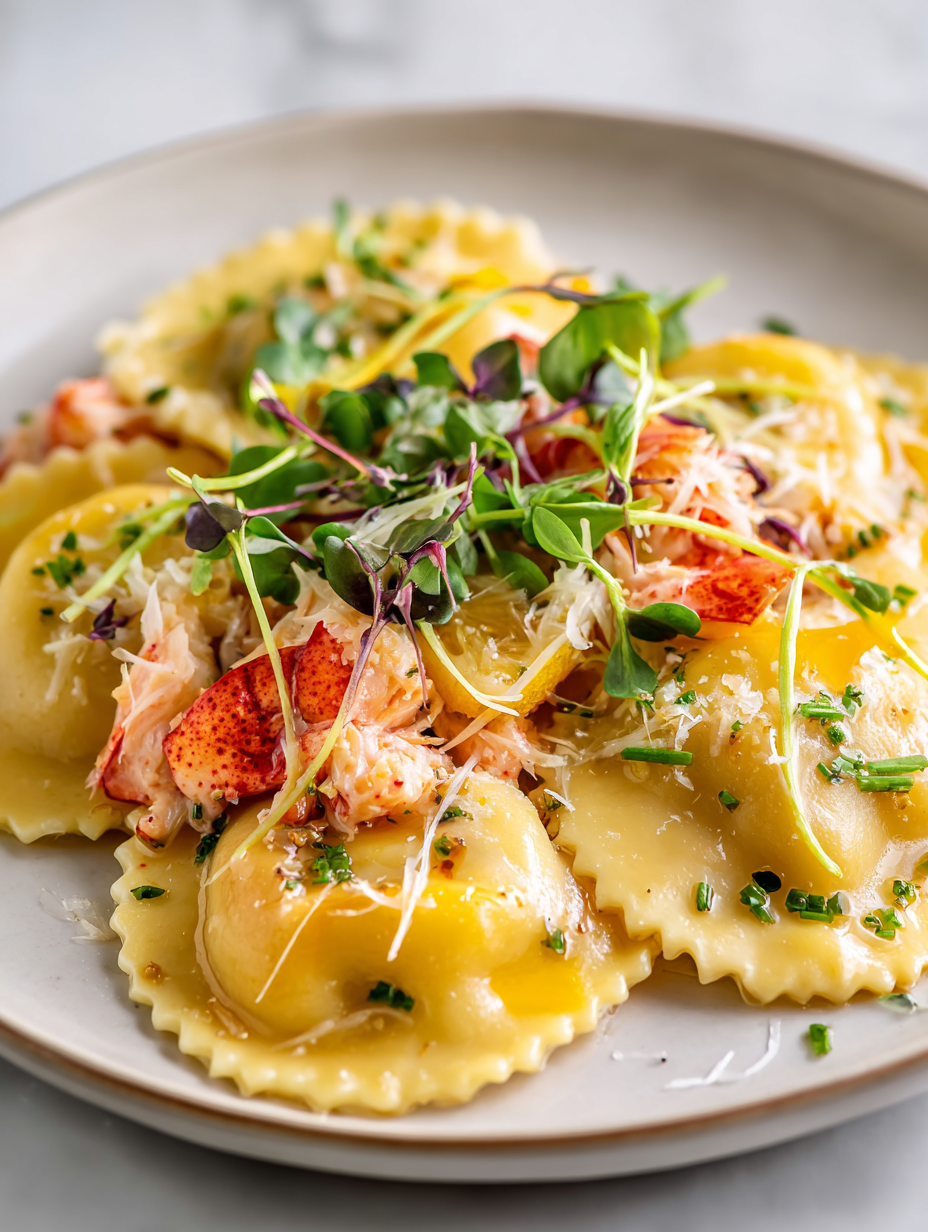
Lobster Citrus Ravioli
Ingredients
Equipment
Method
- Mix the flour and eggs together in a bowl and knead until the dough is smooth and elastic, about 8 minutes. Wrap in plastic and let rest for 30 minutes to relax the gluten.
- While the dough rests, prepare the filling by combining chopped lobster, ricotta, lemon zest, chopped dill, salt, and pepper in a bowl. Mix until creamy and well combined.
- Divide the rested dough into four portions. Roll each portion through a pasta machine, starting at the thickest setting and gradually thinning until about 1 mm thick, creating silky, even sheets.
- Place small spoonfuls of the lobster filling about 2 inches apart on one sheet of pasta. Lightly brush the edges and between the filling with water, then cover with another sheet of pasta and gently press around each mound to seal, removing excess air.
- Cut the assembled sheets into individual ravioli using a cutter or sharp knife, ensuring each piece is well sealed around the edges.
- Bring a large pot of salted water to a rolling boil. Gently drop the ravioli in and cook for about 3–4 minutes, or until they float and are tender.
- Meanwhile, melt butter in a skillet over medium heat and add white wine. Let it simmer until fragrant, about 2 minutes.
- Using a slotted spoon, transfer the cooked ravioli directly into the skillet with the butter and wine sauce. Gently toss to coat each piece evenly, allowing the sauce to cling and glaze the ravioli beautifully.
- Serve the ravioli immediately, garnished with extra herbs if desired, and enjoy the bright, luxurious flavors of this ocean-inspired dish.
Pro tips for perfect lobster ravioli
- Use a pasta machine for super even, thin sheets—this helps seal the ravioli perfectly.
- When filling, keep the lobster mixture chilled—warm filling can make sealing tricky and cause leaks.
- Seal edges well with a brush of water—this prevents leaks during boiling and keeps the shape intact.
- Drop ravioli gently into boiling water—too rough and they might tear, too slow and they stick together.
- Toss cooked ravioli in warm, melted butter—this helps the sauce cling and adds a luscious finish.
- Rest the assembled ravioli for 10 minutes before boiling—this helps the filling set and prevents bursting.
- Check for doneness by floating and feeling for tender, yet firm, pasta—don’t overcook, or they’ll turn mushy.
Common mistakes and how to fix them
- FORGOT to check pasta for doneness → Test by floating and tender texture.
- DUMPED filling or overstuffed ravioli → Use small teaspoons, seal edges thoroughly.
- OVER-TORCHED sauce or pasta → Cook sauce on medium heat, avoid high flames.
- MISSED to dry pasta sheets properly → Lightly dust with flour to prevent sticking.
Quick fixes and pantry swaps
- If sauce shimmers and crackles, it’s ready—don’t overcook or it’ll burn quickly.
- Splash a bit of lemon juice if filling tastes dull—brighten with a quick citrus boost.
- Patch over small tears in pasta with a tiny dab of water—seal quickly to prevent leaks.
- DUMPED too much filling—use a teaspoon, and press edges firmly to avoid bursting.
- When rushing, swap fresh herbs with dried—use half to avoid overpowering the delicate filling.
Prep, store, and reheat tips
- Prepare the lobster filling and keep it chilled in the fridge for up to 24 hours—keeps flavors fresh and firm.
- Assemble and shape the ravioli a day ahead; store on a floured tray, covered loosely, in the fridge for up to 8 hours—avoid sticking.
- Cooked ravioli can be frozen for up to 2 months; flash freeze on a baking sheet first, then transfer to a bag—prevent freezer burn and preserve texture.
- Reheat in gently simmering salted water or warm butter sauce, about 2–3 minutes—look for a slight puffing and glossy surface, smell for aromatic butter and herbs.
Top questions about lobster ravioli
1. Can I use frozen lobster for ravioli?
Fresh lobster gives a sweeter, more tender bite, but frozen lobster works in a pinch if properly thawed and drained.
2. How do I thaw lobster safely?
Yes, but make sure to thaw it completely and pat it dry to prevent excess moisture which can make the filling runny.
3. How long should I cook lobster ravioli?
Cook the ravioli in boiling salted water for about 3-4 minutes until they float and are tender, then taste test one for doneness.
4. What tools do I need to assemble ravioli?
Use a small spoon or piping bag for precise filling, and a pasta cutter or sharp knife to cut the ravioli neatly.
5. How do I prevent ravioli from leaking?
Seal the edges well with a brush of water or egg wash to prevent leaks during boiling.
6. How do I finish the sauce for ravioli?
Toss the cooked ravioli gently in a butter and white wine sauce, making sure they’re well coated for flavor and shine.
7. Can I make lobster ravioli ahead?
You can prepare the filling up to a day ahead and keep it chilled, or assemble the ravioli and freeze for later use.
8. How should I store unboiled ravioli?
Store uncooked assembled ravioli in a floured tray, covered loosely, for up to 8 hours in the fridge; freeze for longer storage.
9. What’s a sign my sauce is ready?
If the sauce shimmers and crackles, it’s properly heated—avoid overcooking the sauce or it will burn.
10. How can I boost the flavor if it’s bland?
If filling tastes dull, squeeze a little fresh lemon juice over it to brighten the flavor before sealing.
Making lobster ravioli at home might seem intimidating, but once you get the hang of it, it’s a rewarding process. The delicate, briny lobster paired with bright citrus and buttery sauce is worth every minute spent shaping and cooking. It’s a dish that feels fancy but is rooted in simple, honest cooking.
This recipe is perfect for special occasions or whenever you want to indulge in a little seafood luxury. The flavors are vibrant and fresh, and the process reminds me how satisfying it is to create something both beautiful and delicious from scratch. Every bite feels like a small celebration of good ingredients and a little bit of kitchen effort.

Hi, I’m Emily Carter, the creator and recipe developer behind Salt Strategist. I’m so happy you’re here. This blog is where my love for flavor, creativity, and thoughtful cooking comes together in one beautiful, ever evolving space.


