
Lemon isn’t just a bright flavor here; it’s the secret weapon in balancing the richness of roast chicken. I’ve learned that squeezing fresh lemon over the crispy skin just as it comes out of the oven lifts every bite, making it feel lighter and more vibrant. It’s a simple trick, but one that transforms the whole dish from ordinary to memorable.
This recipe came about on a busy weeknight when I wanted something comforting but with a zing. The herbs—thyme, rosemary, maybe a dash of parsley—add a fragrant depth, but it’s the lemon that pulls everything together. It’s honest cooking, unpolished, but with a clear sense of purpose.
Focusing on the overlooked importance of the lemon’s role in balancing the chicken’s richness, I want to explore how the citrus not only flavors but also tenderizes and brightens the dish in unexpected ways.
The lemon’s quiet power
- The lemon’s quiet power—its bright zing can turn a simple roast into something surprisingly lively.
- I remember the first time I squeezed lemon over hot chicken and watched the skin shimmer with freshness.
- Nothing beats the smell of herbs and lemon mingling in the oven, filling the kitchen with a warm, inviting scent.
- This dish reminds me of family dinners where everyone gathered around, passing plates and sharing stories over crisp skin.
- There’s a small thrill in how a squeeze of lemon just before serving elevates every bite, making it feel special.
The story behind this recipe
- This roast chicken recipe started from a simple need to elevate a weekday dinner. I was tired of the usual, so I played around with lemon and herbs, trying to find that perfect balance of bright and savory. One afternoon, I threw a lemon, thyme, and rosemary into a whole chicken before roasting, and the result was unexpectedly lively and tender. It’s become a go-to for those nights when I want comfort with a little extra brightness.
- What keeps bringing me back to this dish is how the lemon’s sharpness cuts through the richness of the chicken skin, making each bite feel fresh. I love how the herbs scent the meat as it roasts, filling the kitchen with an aromatic promise. It’s honest cooking, no fuss, just good ingredients and a bit of patience.
- heading: The lemon’s quiet power
Historical and Cultural Notes
- The combination of lemon and herbs in roast chicken has roots in Mediterranean cooking, where citrus and fresh herbs are staples for brightening rich meats.
- Historically, lemon was valued not only for flavor but also for its preservative qualities, helping to tenderize and keep poultry moist in warm climates.
- Ancient Romans and Greeks often used lemon and herbs together to flavor their roasted poultry, a practice that has persisted through centuries.
- The use of lemon in roasting chicken gained popularity in France during the Renaissance, where it was favored for its ability to add brightness to game and poultry dishes.
Ingredient breakdown
- Lemon: I love using fresh lemon zest and juice; the bright, zesty aroma really wakes up the dish. Swap with lime for a slightly different tang, but stick to fresh for that vibrant punch.
- Herbs (thyme, rosemary): These fragrant herbs add earthy depth. If fresh isn’t available, dried herbs work but use half the amount and crush them first to release more aroma.
- Olive oil: I drizzle generously to help the skin crisp up nicely and keep the meat moist. For a lighter option, try melted butter or a neutral oil like grapeseed.
- Garlic: I crush or chop garlic finely, letting it roast alongside the chicken for a mellow, caramelized sweetness. If you’re sensitive to garlic, reduce the amount or skip it altogether.
- Salt: I use kosher or sea salt to season generously—underseasoning is the biggest mistake here. Adjust based on your salt preference, but don’t skimp.
- Pepper: Freshly ground black pepper adds a sharp, spicy note. If you prefer milder, substitute with white pepper or skip altogether for a subtler flavor.
- Optional: Vegetables like carrots or potatoes: I toss these in with the chicken for one-pan cooking. Use hearty roots to stand up to roasting at high heat, or skip for a more focused chicken experience.
Spotlight on key ingredients
Lemon:
- I love using fresh lemon zest and juice; the bright, zesty aroma really wakes up the dish. Swap with lime for a slightly different tang, but stick to fresh for that vibrant punch.
- Herbs (thyme, rosemary): These fragrant herbs add earthy depth. If fresh isn’t available, dried herbs work but use half the amount and crush them first to release more aroma.
Herbs and aromatics:
- Olive oil: I drizzle generously to help the skin crisp up nicely and keep the meat moist. For a lighter option, try melted butter or a neutral oil like grapeseed.
- Garlic: I crush or chop garlic finely, letting it roast alongside the chicken for a mellow, caramelized sweetness. If you’re sensitive to garlic, reduce the amount or skip it altogether.
Notes for ingredient swaps
- Lemon: I love using fresh lemon zest and juice; the bright, zesty aroma really wakes up the dish. Swap with lime for a slightly different tang, but stick to fresh for that vibrant punch.
- Herbs (thyme, rosemary): These fragrant herbs add earthy depth. If fresh isn’t available, dried herbs work but use half the amount and crush them first to release more aroma.
- Olive oil: I drizzle generously to help the skin crisp up nicely and keep the meat moist. For a lighter option, try melted butter or a neutral oil like grapeseed.
- Garlic: I crush or chop garlic finely, letting it roast alongside the chicken for a mellow, caramelized sweetness. If you’re sensitive to garlic, reduce the amount or skip it altogether.
- Salt: I use kosher or sea salt to season generously—underseasoning is the biggest mistake here. Adjust based on your salt preference, but don’t skimp.
- Pepper: Freshly ground black pepper adds a sharp, spicy note. If you prefer milder, substitute with white pepper or skip altogether for a subtler flavor.
- Optional: Vegetables like carrots or potatoes: I toss these in with the chicken for one-pan cooking. Use hearty roots to stand up to roasting at high heat, or skip for a more focused chicken experience.
Equipment & Tools
- Roasting pan: To hold the chicken during roasting and collect juices.
- Tongs: To handle and turn the chicken safely.
- Sharp knife: To carve the chicken smoothly.
- Meat thermometer: To check internal temperature for doneness.
- Kitchen twine: To tie the chicken legs for even cooking.
Step-by-step roast chicken with lemon
- Preheat oven to 220°C (425°F). Gather a roasting pan, tongs, and a sharp knife. Pat the chicken dry with paper towels; dry skin crisps better.
- Stuff the cavity with lemon halves, a few sprigs of thyme and rosemary. Tie the legs with kitchen twine for even cooking. Rub the chicken all over with olive oil, salt, pepper, and minced garlic.
- Place the chicken breast-side up in the roasting pan. Roast uncovered for about 20 minutes, then reduce oven to 180°C (350°F). Continue roasting for 45-55 minutes, basting occasionally with pan juices.
- Check for color; the skin should be golden and crisp. Insert a meat thermometer into the thickest part of the thigh—aim for 75°C (165°F). If skin is too dark before cooking is complete, tent with foil.
- Once cooked, remove from oven and transfer to a cutting board or plate. Let rest for at least 10 minutes. Squeeze fresh lemon juice over the chicken before carving. Serve with roasted vegetables or a simple salad.
Let the chicken rest for 10 minutes, tented loosely with foil. Carve and squeeze fresh lemon juice over the top. Serve on a warm platter, drizzled with pan juices or extra lemon if desired.
How to Know It’s Done
- Juices run clear when pierced; no pink remains.
- Thermometer reads 75°C (165°F) in the thigh.
- Skin is golden, crispy, and aromatic.
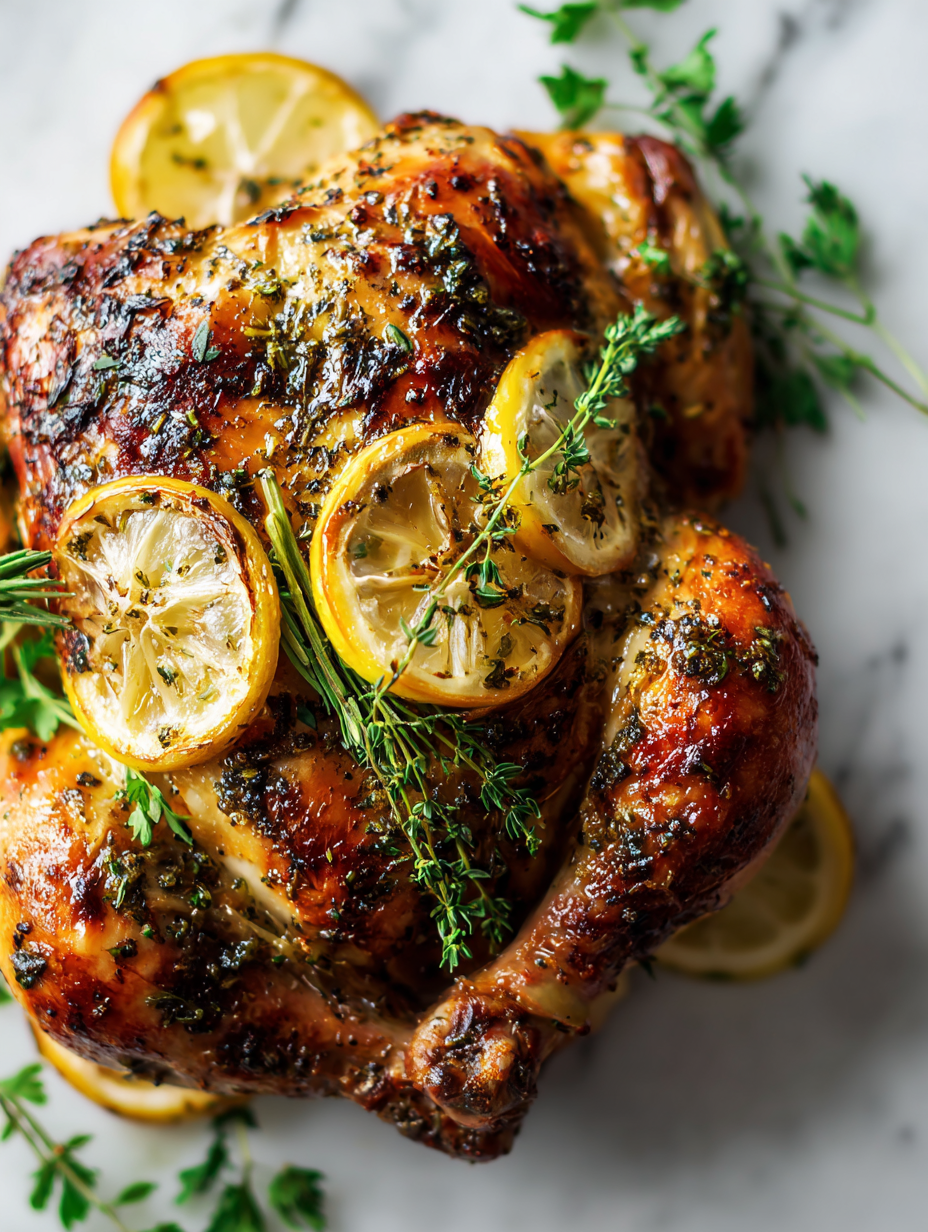
Lemon-Herb Roast Chicken
Ingredients
Equipment
Method
- Preheat your oven to 220°C (425°F). Pat the chicken dry with paper towels—this helps the skin crisp up beautifully.
- Stuff the cavity with lemon halves, a few sprigs of thyme, rosemary, and some garlic. Tying the legs with kitchen twine helps the bird cook evenly.
- Mix the olive oil with salt, pepper, and minced garlic. Rub this mixture all over the chicken, massaging the skin to help it crisp and flavor to penetrate.
- Place the chicken breast-side up in a roasting pan. If using vegetables, scatter them around the chicken for a one-pan meal.
- Roast uncovered for about 20 minutes to start browning the skin, then reduce the oven temperature to 180°C (350°F). Continue roasting for 45-55 minutes, basting occasionally with pan juices.
- Check the skin; it should be golden and crispy. Insert a meat thermometer into the thickest part of the thigh—aim for 75°C (165°F) to ensure doneness.
- Once cooked, remove the chicken from the oven and transfer to a cutting board. Let it rest for at least 10 minutes—this keeps the meat juicy.
- Before carving, squeeze fresh lemon juice over the hot chicken—this brightens the flavors and adds a lovely shine to the skin.
- Carve the chicken into pieces, serve on a warm platter, and enjoy the crispy skin, aromatic herbs, and vibrant lemon flavor in every bite.
Pro tips for perfect roast chicken
- Bolded mini-head: Use a hot oven early on → Searing the skin at 220°C (425°F) helps achieve a crispy exterior from the start.
- Bolded mini-head: Baste with pan juices → Every 15 minutes, spoon the flavorful drippings over the chicken to keep it moist and flavorful.
- Bolded mini-head: Check skin color early → If it’s browning too fast, tent with foil to prevent burning while the meat cooks through.
- Bolded mini-head: Rest before carving → Rest the chicken for at least 10 minutes to let juices redistribute, ensuring juicy slices.
- Bolded mini-head: Squeeze lemon just before serving → Fresh lemon brightens the dish and prevents sogginess, adding a zesty punch.
- Bolded mini-head: Use a thermometer → Aim for 75°C (165°F) in the thigh for perfect doneness without overcooking.
- Bolded mini-head: Add herbs in the cavity → Stuff with herbs and lemon for aromatic infusion and enhanced flavor during roasting.
Common mistakes and how to fix them
- FORGOT to pat dry the chicken skin, resulting in less crispness. Always dry thoroughly before roasting.
- DUMPED too much lemon juice over the hot chicken, causing it to become soggy. Squeeze just before serving.
- OVER-TORCHED the skin by roasting at too high a temperature. Reduce heat if skin turns dark too quickly.
- MISSED the resting step, which led to juiceless slices. Rest for at least 10 minutes before carving.
Quick fixes and pantry swaps
- When chicken skin isn’t crisp, splash with a little hot oil or broil briefly to rescue texture.
- If lemon juice makes the skin soggy, patch with a quick broil or serve lemon on the side instead.
- Over-torched skin? Shield with foil and reduce oven temp to finish cooking gently.
- Forgot to pat dry? Dried skin crisps better—always towel off moisture before roasting.
- If herbs burn during roasting, sprinkle fresh herbs after cooking or add them in the cavity for aroma.
Prep, store, and reheat tips
- Prepping the chicken: You can dry and season the chicken a day ahead, then keep it uncovered in the fridge for a crisper skin.
- Storage: Leftovers keep well in an airtight container in the fridge for up to 3 days. Reheat gently to preserve moisture and skin texture.
- Shelf life: The cooked chicken remains flavorful for about 2-3 days, but the skin may soften. Best enjoyed within this window.
- Reheating: Warm in a low oven (around 150°C/300°F) for 10-15 minutes until just heated through. Avoid microwave if you want crispy skin; it can get soggy.
- Sensory note: Reheated chicken should smell bright with lemon and herbs, and the skin should regain some crispness if reheated carefully.
Top questions about roast chicken with lemon and herbs
1. Can I use bottled lemon juice instead of fresh?
Use fresh lemon juice and zest for the brightest flavor, adding it just before serving to keep the citrus sharp and vibrant.
2. Is bottled lemon juice okay to use?
Yes, but bottled juice lacks the brightness and aroma of fresh lemon zest, which really lifts the dish’s flavor.
3. What’s the best oven temperature for crispy skin?
Roast the chicken at a high temperature initially to crisp the skin, then lower it to finish cooking without burning.
4. How do I know when the chicken is fully cooked?
Check the internal temperature with a meat thermometer; 75°C (165°F) in the thigh signals it’s done perfectly.
5. Why is resting the chicken important?
Rest the chicken for at least 10 minutes after roasting to let the juices redistribute, keeping slices juicy.
6. Should I stuff herbs inside the chicken?
Stuff herbs and lemon inside the cavity for aromatic infusion, which enhances flavor during roasting.
7. How can I make the skin crispier?
If the skin isn’t crispy enough, broil it briefly or increase oven heat during the last few minutes, but watch carefully.
8. What tools are best for carving the chicken?
Use a sharp knife for carving and a meat thermometer for accuracy, ensuring clean slices and perfect doneness.
9. How should I store and reheat leftover chicken?
Leftovers can be refrigerated in an airtight container for up to 3 days; reheat gently in a low oven to prevent sogginess.
10. How much salt and herbs should I use?
Avoid over-seasoning; salt and herbs are enough to enhance the natural flavors without overpowering the lemony brightness.
This roast chicken with lemon and herbs feels like a small celebration in the middle of a busy week. The citrus brightens the richness, making every bite feel lively and satisfying. It’s honest, unpolished, but somehow elevates simple ingredients into something memorable.
Whenever I make this dish, I’m reminded that good cooking doesn’t need fuss—just fresh ingredients, patience, and a little squeeze of lemon at the right moment. It’s a dish I keep coming back to, especially when I need comfort with a touch of brightness.

Hi, I’m Emily Carter, the creator and recipe developer behind Salt Strategist. I’m so happy you’re here. This blog is where my love for flavor, creativity, and thoughtful cooking comes together in one beautiful, ever evolving space.


