
Marinating chicken for just an extra hour seems simple, but it really shifts the flavor and tenderness. It’s a small step that turns ordinary kebabs into something smoky, juicy, and packed with depth. I used to rush through marinating, but now I see that patience pays off, especially when grilling over an open flame.
There’s something satisfying about waiting those extra 60 minutes. The chicken absorbs the herbs, lemon juice, and spices, creating a fragrant marinade that practically preps itself for the grill. When the skewers hit the heat, that aroma alone makes the wait worth it, and the meat cooks up tender and bursting with flavor.
Focusing on the overlooked importance of marinade timing and how a simple extra hour can transform chicken kebabs into a smoky, tender masterpiece.
The subtle art of marinade timing
- Getting the marinade just right feels like a small victory, and it really makes the chicken juicy and flavorful.
- There’s a certain thrill in the smoky aroma that fills the grill and signals it’s time to eat.
- I love how a simple marinade can unlock memories of summer cookouts and family gatherings.
- Watching the skewers char slightly at the edges gives me a quiet pride in the process.
The story behind this recipe
- This recipe came out of a lazy summer weekend when I realized that the best kebabs I’d ever had were from a tiny street stall in a forgotten corner of a bustling market. The secret was in the marinade—something simple, yet it made all the difference in tender, smoky meat. Ever since, I’ve been chasing that elusive flavor, trying to recreate that moment in my own backyard.
- It’s funny how a small tweak, like letting the chicken sit for an extra hour, can turn good kebabs into something memorable. I love the quiet anticipation while waiting, knowing that those flavors are deepening, ready to burst on the grill. It’s a ritual I now cherish, especially when the weather finally cooperates and I can fire up the grill.
- heading: The story behind this recipe
Historical and Cultural Insights
- Chicken kebabs have roots in Middle Eastern and Central Asian cuisines, where grilling meat on skewers dates back centuries.
- The word ‘kebab’ comes from Persian origins, meaning ‘to roast’ or ‘to burn,’ highlighting the cooking method’s history.
- In Turkey, kebabs are a street food staple, often marinated with local herbs and served with flatbread and yogurt.
- Marinating meats before grilling is an age-old technique that helps tenderize and infuse flavor, a practice still vital today.
- The smoky aroma of grilled kebabs is linked to traditional open-flame cooking methods, dating back to nomadic cultures.
Ingredient breakdown
- Chicken thighs: I prefer thighs because they stay juicy and tender even if slightly overcooked. You might try breasts, but watch the cooking time to prevent drying out.
- Lemon juice: It brightens the marinade with a zesty punch, making the chicken sing. If you want a milder citrus flavor, cut back slightly or add a splash of orange juice.
- Yogurt: I use plain Greek yogurt for its creaminess and tang. Skip it if you’re dairy-free, but consider adding a splash of coconut milk for moisture.
- Spices (paprika, cumin, garlic powder): These give the kebabs a smoky warmth. Feel free to adjust quantities or add chili powder for extra heat.
- Olive oil: It helps everything stick and keeps the chicken moist. Use a good extra virgin for richer flavor, or swap with avocado oil if you prefer a milder taste.
- Vegetables (bell peppers, onions): They add sweetness and crunch. For a charred flavor, brush lightly with oil before grilling, or swap in zucchini or cherry tomatoes for variety.
- Skewers: Wooden or metal—your call. If using wood, soak them in water for 30 minutes to prevent burning. Metal skewers are more durable and easier to handle.
Spotlight on key ingredients
Chicken thighs:
- I prefer thighs because they stay juicy and tender even if slightly overcooked. You might try breasts, but watch the cooking time to prevent drying out.
- Lemon juice: It brightens the marinade with a zesty punch, making the chicken sing. If you want a milder citrus flavor, cut back slightly or add a splash of orange juice.
- Yogurt: I use plain Greek yogurt for its creaminess and tang. Skip it if you’re dairy-free, but consider adding a splash of coconut milk for moisture.
Lemon juice:
- It brightens the marinade with a zesty punch, making the chicken sing. If you want a milder citrus flavor, cut back slightly or add a splash of orange juice.
- Yogurt: I use plain Greek yogurt for its creaminess and tang. Skip it if you’re dairy-free, but consider adding a splash of coconut milk for moisture.
Notes for ingredient swaps
- Dairy-Free: Swap yogurt for coconut milk or a splash of olive oil. The marinade will be less tangy, but still tender.
- Low-Sodium: Use a salt-free spice blend and omit added salt. Expect a milder, more herbaceous flavor profile.
- Vegan: Replace chicken with firm tofu or tempeh, and use a plant-based yogurt or marinade base. Expect a different texture, but still flavorful.
- Citrus Variations: Substitute lemon juice with lime or orange juice for a different zesty note. Adjust acidity to taste.
- Herb Boost: Add chopped fresh herbs like cilantro or parsley for extra freshness. Skip dried herbs for a brighter flavor.
- Sweet Heat: Incorporate a dash of honey or maple syrup in the marinade for a subtle sweetness. Be mindful of grill flare-ups.
- Vegetable Mix: Use cherry tomatoes, zucchini slices, or pineapple chunks instead of traditional peppers and onions. Adds variety and smoky sweetness.
Equipment & Tools
- Wooden skewers: To thread and cook the chicken and vegetables.
- Grill or barbecue: To cook the kebabs over direct heat, imparting smoky flavor.
- Mixing bowls: To combine marinade ingredients and coat the chicken.
- Whisk: To blend marinade smoothly.
- Tongs: To turn and handle hot skewers safely.
- Brush or cloth: To oil the grill grates for easy release and even cooking.
Step-by-step guide to chicken kebabs
- Soak wooden skewers in water for 30 minutes to prevent burning. If using metal skewers, skip this step.
- Mix marinade: combine lemon juice, yogurt, garlic, paprika, cumin, olive oil, salt, and pepper in a bowl. Whisk until smooth.
- Cut chicken into 2-inch cubes. Place in a large bowl or zip-top bag. Pour marinade over chicken, toss to coat evenly.
- Cover or seal and refrigerate for at least 1 hour, ideally up to 3 hours, to deepen flavors. Longer marinating develops smoky notes.
- Preheat grill to medium-high heat (around 200°C/390°F). Clean and oil the grates to prevent sticking.
- Thread marinated chicken pieces onto skewers, alternating with bell peppers and onions if desired. Leave a little space between pieces for even cooking.
- Place skewers on grill, about 4 inches from heat source. Cook for 10-12 minutes, turning every 2-3 minutes, until chicken is nicely charred and cooked through.
- Check doneness: the chicken should reach an internal temperature of 75°C/165°F, and juices should run clear when pierced.
- Remove skewers from grill. Let rest for 5 minutes; this helps juices redistribute and keeps the meat tender.
- Serve hot, garnished with fresh herbs or lemon wedges if desired. Enjoy the smoky, tender bites!
Let the cooked kebabs rest for 5 minutes off the heat to allow juices to settle. Serve directly from skewers or transfer to a platter, garnished with herbs or lemon slices for brightness.
How to Know It’s Done
- Chicken reaches an internal temperature of 75°C/165°F.
- Meat is opaque and slightly charred at edges.
- Juices run clear when pierced with a skewer.
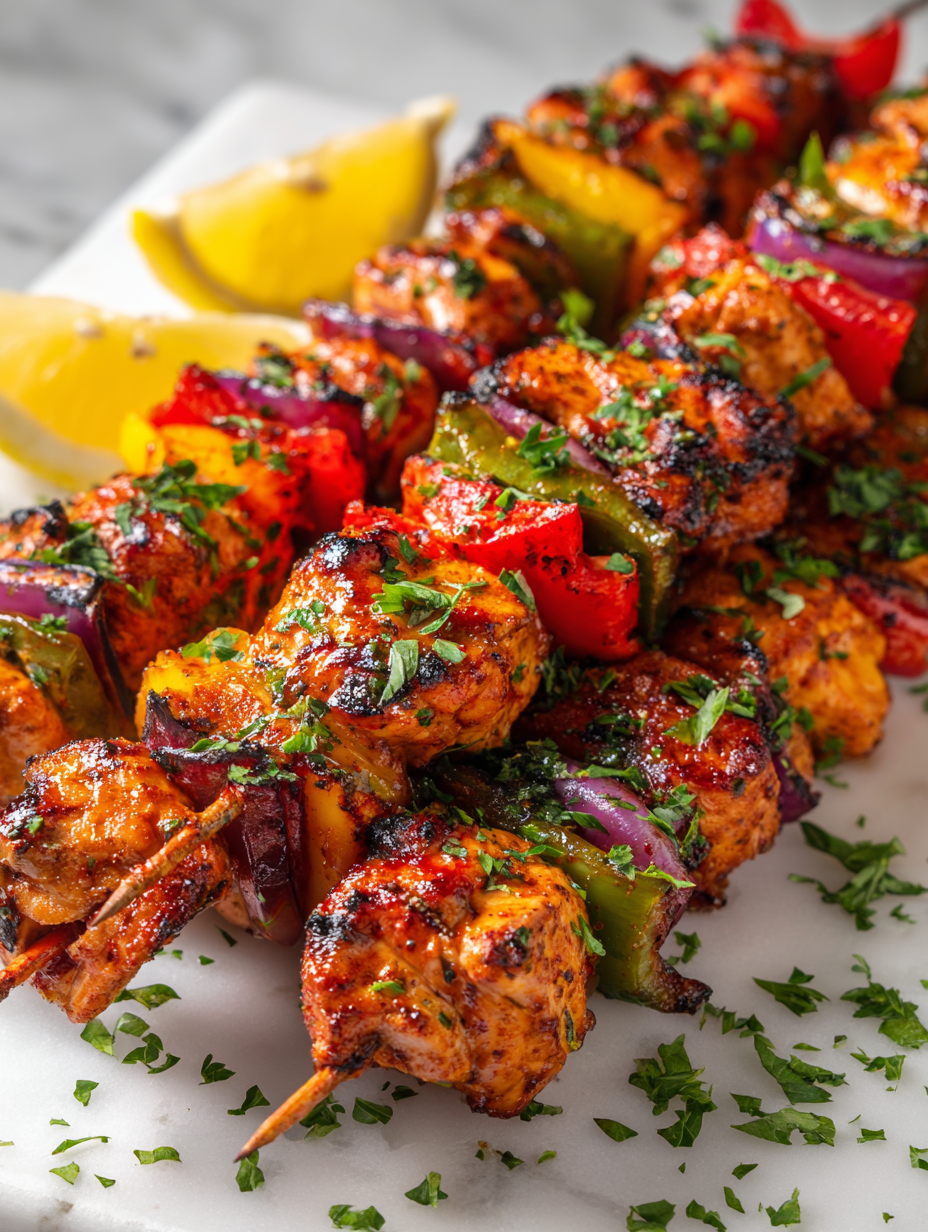
Marinated Chicken Kebabs
Ingredients
Equipment
Method
- Place the wooden skewers in water to soak for at least 30 minutes, preventing them from burning on the grill.
- In a large mixing bowl, whisk together lemon juice, Greek yogurt, minced garlic, paprika, cumin, olive oil, salt, and black pepper until well combined, creating a fragrant marinade.
- Add the chicken cubes to the bowl with the marinade, tossing to coat all pieces evenly. Cover and refrigerate for at least 1 hour, up to 3 hours, to deepen the flavors.
- Preheat your grill to medium-high heat, around 200°C (390°F). Lightly oil the grates to prevent sticking and ensure good grill marks.
- Thread the marinated chicken pieces onto the skewers, alternating with chunks of bell peppers and onions for color and flavor. Leave a small space between pieces for even cooking.
- Place the skewers on the hot grill, about 4 inches from the heat source. Cook for 10-12 minutes, turning every 2-3 minutes with tongs, until the chicken is golden brown and slightly charred at the edges.
- Check that the internal temperature of the chicken has reached 75°C (165°F) and that the juices run clear when pierced. The meat should be opaque and browned with grill marks.
- Remove the skewers from the grill and let rest for 5 minutes. This helps the juices redistribute, keeping the chicken tender and moist.
- Serve the chicken kebabs hot off the grill, garnished with fresh herbs or lemon wedges for an extra burst of flavor. Enjoy the smoky, tender bites with your favorite sides.
Pro tips for perfect kebabs
- Bolded mini-head: Use high heat → Sear the chicken quickly to develop a smoky crust without drying out.
- Bolded mini-head: Marinate longer → Aim for at least 1 hour, but up to 3 for deeper flavor and tenderness.
- Bolded mini-head: Thread with space → Leave a little gap between pieces for even cooking and better char.
- Bolded mini-head: Turn frequently → Flip skewers every few minutes to prevent burning and ensure uniform char.
- Bolded mini-head: Oil the grill grates → Prevent sticking and promote grill marks, especially if using a clean, hot grill.
- Bolded mini-head: Check internal temp → Use a probe to ensure 75°C/165°F for safe, juicy chicken.
- Bolded mini-head: Rest before serving → Let the skewers sit for 5 minutes to lock in juices and enhance tenderness.
Common mistakes and how to fix them
- FORGOT to soak wooden skewers → Soak skewers at least 30 minutes to prevent burning.
- DUMPED marinade too early → Marinate for a minimum of 1 hour for better flavor penetration.
- OVER-TORCHED the kebabs → Turn frequently and watch for even charring, not blackening.
- MISSED internal temperature check → Use a probe thermometer to ensure 75°C/165°F internal temp.
Quick fixes and pantry swaps
- When skewers burn, splash them with water and turn down the heat.
- If chicken is undercooked, patch with a quick 2-minute grill over indirect heat.
- Dumped marinade too early? Rest the chicken in marinade for extra flavor.
- Over-torched kebabs? Shield with foil and lower grill temperature for even cooking.
- When smoky aroma fades, open windows and increase grill heat for a quick burst of flavor.
Prep, store, and reheat tips
- Marinate the chicken a day ahead in the fridge; the flavors deepen and the texture becomes more tender. Cover tightly and store for up to 24 hours, ensuring the meat stays juicy and fragrant.
- Skewering the chicken and vegetables can be done a few hours in advance. Keep the assembled skewers covered in the fridge to prevent drying out or contamination.
- Store leftovers in an airtight container in the fridge for up to 2 days. The smoky aroma will mellow, but the meat remains tender and flavorful when reheated.
- Reheat gently in a 180°C/350°F oven, wrapped in foil to retain moisture. Expect a slight loss of char and aroma, but the meat will still be juicy and fragrant after 10-15 minutes.
- For best freshness, bring the kebabs to room temperature for 15-20 minutes before reheating. This helps them heat evenly and preserves their smoky, tender qualities.
Top questions about chicken kebabs
1. Can I use chicken breasts instead of thighs?
Use chicken thighs for juicy, tender meat that stays moist even if slightly overcooked. Breasts are leaner but can dry out quickly.
2. How long should I marinate the chicken?
Marinate the chicken for at least 1 hour, but up to 3 hours for deeper flavor and tenderness.
3. Do I need to soak wooden skewers?
Soak wooden skewers in water for 30 minutes before threading the chicken; this prevents them from burning on the grill.
4. What’s the best grill temperature?
Preheat your grill to about 200°C (390°F) to get a good sear. Turn skewers every few minutes for even cooking.
5. How do I know when the kebabs are done?
Check the internal temperature of the chicken; it should reach 75°C (165°F). Also, look for opaque, slightly charred meat with clear juices.
6. Can I substitute the lemon juice?
For a milder citrus flavor, reduce lemon juice slightly or switch to lime or orange juice for a different zest.
7. What can I use instead of yogurt?
If you don’t have Greek yogurt, use coconut milk or a splash of olive oil; the marinade will be less tangy but still tender.
8. What if my chicken overcooks or burns?
Overcooking can dry out the chicken. Turn the skewers frequently and monitor the heat to prevent burning and uneven charring.
9. Should I rest the kebabs before serving?
Rest the cooked kebabs for 5 minutes off the heat; this redistributes juices and keeps the meat tender.
10. How should I store and reheat leftovers?
Leftovers can be stored in an airtight container in the fridge for up to 2 days. Reheat in a moderate oven for best flavor and moisture.
These chicken kebabs are more than just grilled meat on skewers; they’re a reminder that a little extra time marinating can make all the difference. The smoky aroma, tender bites, and bright citrus punch come from simple steps that pay off in flavor and texture.
Whenever I make these, I find myself leaning into the quiet anticipation of waiting, then savoring the charred, juicy results. It’s a dish that feels honest and unpretentious, yet still special enough to turn an ordinary meal into something memorable.

Hi, I’m Emily Carter, the creator and recipe developer behind Salt Strategist. I’m so happy you’re here. This blog is where my love for flavor, creativity, and thoughtful cooking comes together in one beautiful, ever evolving space.


