
This baked falafel recipe is a real lifesaver when you want something flavorful and satisfying without the fuss of deep-frying. It’s perfect for busy weeknights or when you want to keep the kitchen a little calmer. I love how the aroma of cumin, garlic, and herbs fills the air as it bakes—so inviting, yet straightforward.
What makes this recipe stand out is how it balances crunch and tenderness without all the greasy mess. You get that crispy exterior from the oven, and a soft, herbaceous interior that’s just as good as fried falafel. Plus, it’s easy to tweak with what you have on hand, making it adaptable for any kitchen chaos.
This baked falafel recipe is a game-changer for busy weeknights. No deep-frying mess, just crispy, flavorful bites straight from the oven. It’s the kind of dish that feels both satisfying and practical, perfect for a quick, comforting meal without sacrificing flavor or texture.
The story behind this recipe
- This recipe was born out of a weekend craving for falafel that didn’t involve deep-frying. I wanted that crispy, herb-infused bite but with less oil and mess. One afternoon, I threw some chickpeas, herbs, and spices in the food processor, and the smell of cumin and garlic filled the kitchen. It was a small, simple victory that stuck with me.
- Over the years, I kept tweaking the method—baking instead of frying, adding a touch of lemon zest for brightness. It’s become my go-to when I want quick, satisfying bites that are still packed with flavor. Sharing it feels right because it’s honest, approachable, and a little messy in the best way.
- heading: ‘The story behind this recipe’
Ingredient breakdown
- Canned chickpeas: I like using drained, rinsed chickpeas—they give a creamy texture that’s easy to mash. If you want more chew, try lightly mashing some whole beans instead of blending everything smooth.
- Fresh parsley and cilantro: Their bright, grassy notes really wake up the falafel. If you’re out, dried herbs won’t cut it; fresh is worth the extra squeeze of lemon after baking.
- Garlic: I find adding a generous clove gives a punch without overpowering. Roasted garlic can add a sweeter, mellower vibe if you prefer, but don’t skip it—the aroma is irresistible.
- Sesame seeds: Toasted sesame seeds add nutty richness and a subtle crunch. For a different twist, try a sprinkle of nigella seeds for a slightly oniony note.
- Cumin: It’s the secret depth—ground cumin adds warmth. If you’re feeling adventurous, a pinch of smoked paprika can add a smoky layer that’s surprisingly good.
- Breadcrumbs or oats: These help hold everything together. If gluten’s an issue, try ground almonds or cooked quinoa for a nutty, hearty texture.
- Lemon juice: Brightens the flavor with a zingy, citrusy sharpness. Make sure to add just before baking to keep that fresh, lively taste intact.
Spotlight on key ingredients
Chickpeas and Herbs:
- Chickpeas: I love the creamy, dense texture they bring when blended—think smooth but with some bite. Skip soaking or rinsing thoroughly to avoid a pasty result.
- Fresh herbs: Parsley and cilantro burst with bright, grassy aroma during baking. Dried herbs won’t deliver quite the same vibrancy, so add a squeeze of lemon afterward if needed.
Notes for ingredient swaps
- Canned Chickpeas: I prefer drained, rinsed chickpeas—they mash easily and give that creamy base. If you want a firmer bite, try cooking dried chickpeas and mashing them after soaking.
- Fresh Herbs: Parsley and cilantro bring bright, grassy notes. Dried herbs won’t give the same vibrancy, so add a squeeze of lemon post-baking for freshness.
- Garlic: A full clove gives punch without overpowering. Roasted garlic adds sweetness, but stick to raw for that sharp, pungent aroma.
- Sesame Seeds: Toasted sesame seeds add nutty richness and crunch. For a different flavor, sprinkle some nigella seeds for a slightly oniony punch.
- Cumin: Ground cumin adds warmth and depth. Smoked paprika can be a smoky alternative if you’re after a different flavor layer.
- Breadcrumbs/Oats: These help bind the mixture. If gluten-free, try ground almonds or cooked quinoa for that hearty texture.
- Lemon Juice: Brightens everything with citrusy zing. Add just before baking to keep that fresh flavor intact.
Equipment & Tools
- Food processor: To blend chickpeas and herbs into a coarse mixture.
- Baking sheet: To hold the falafel during baking.
- Parchment paper or silicone mat: To prevent sticking and make cleanup easier.
- Spatula: To flip and handle the falafel gently.
- Tablespoon or small scoop: To shape uniform falafel balls.
Step-by-step guide to baked falafel
- Preheat your oven to 200°C (390°F). Line a baking sheet with parchment paper or a silicone mat. Gather a food processor, baking dish, and a spatula.
- Drain and rinse one can of chickpeas. Pat dry with a towel to remove excess moisture. This helps the falafel hold together better in the oven.
- In the food processor, combine chickpeas, 3 cloves of garlic, a handful of fresh parsley and cilantro, 1 teaspoon cumin, and a pinch of salt. Pulse until roughly blended but still slightly chunky—about 10-12 pulses. You want some texture.
- Add 2 tablespoons of breadcrumbs or oats, a teaspoon of lemon zest, and 1 tablespoon of tahini or sesame paste if you have it. Pulse a few more times until combined. The mixture should hold together when pressed; if too loose, sprinkle in a bit more breadcrumbs.
- Using a tablespoon or small ice cream scoop, shape the mixture into small, slightly flattened balls or patties. Place them on the prepared baking sheet, leaving about 2 inches between each.
- Bake the falafel in the oven for 20-25 minutes. Halfway through, flip each piece with a spatula. They should turn golden and crispy around the edges. Keep an eye on them; they can go from perfect to over-baked quickly.
- Once baked, let the falafel rest on the baking sheet for 5 minutes. This helps set the exterior. Serve warm, with a squeeze of lemon or your favorite sauce.
Let the baked falafel rest for 5 minutes on the baking sheet. Serve warm with lemon wedges, tahini, or yogurt sauce. They’re best enjoyed fresh but can be stored in an airtight container in the fridge for up to 3 days. Reheat in the oven at 180°C (350°F) for 8-10 minutes until crispy and heated through.
How to Know It’s Done
- Falafel turn golden brown and crisp at edges.
- Interior feels firm but not dry when pressed gently.
- A slight crackle when you bite into one, indicating crisp exterior.
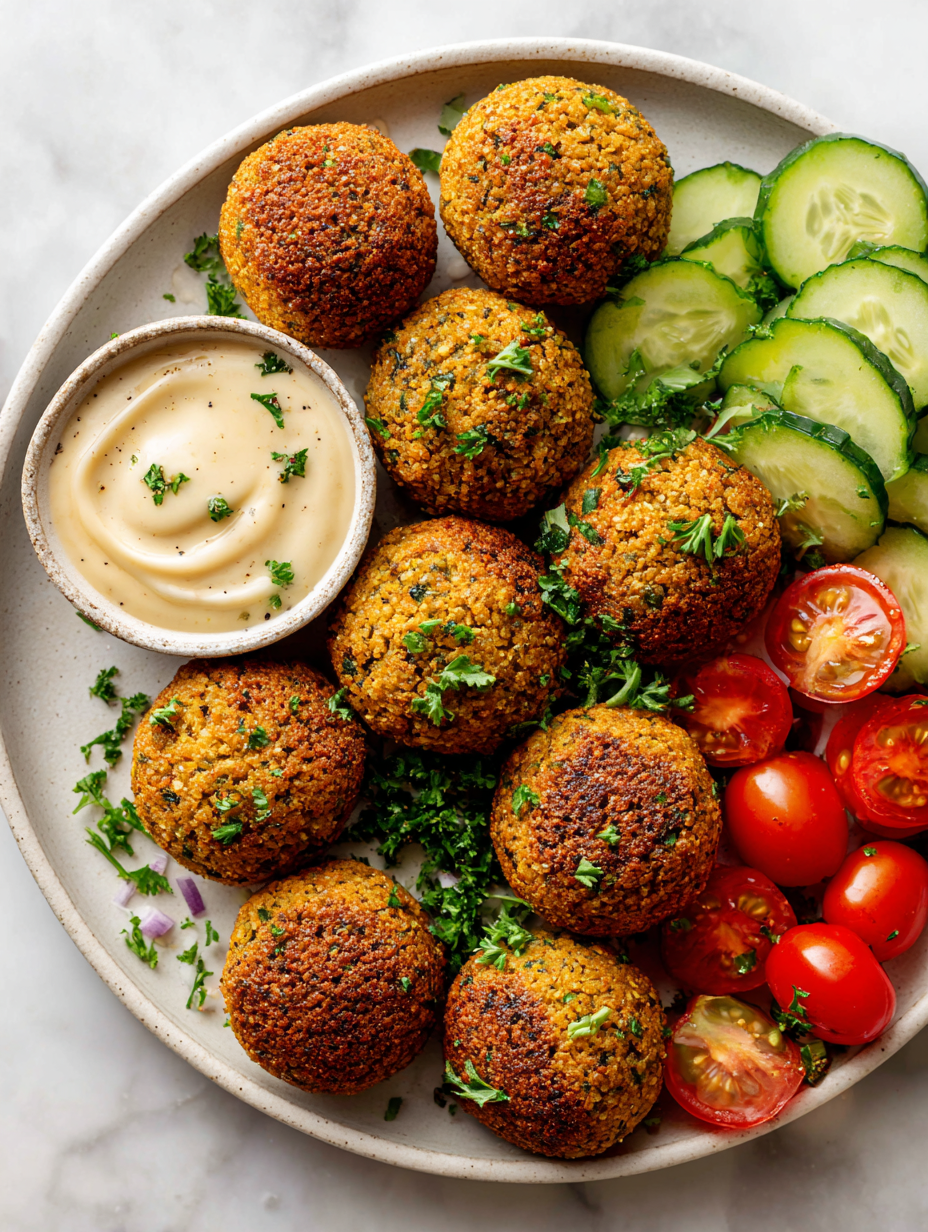
Baked Falafel
Ingredients
Equipment
Method
- Preheat your oven to 200°C (390°F). Line a baking sheet with parchment paper or a silicone mat for easy cleanup.
- Drain and rinse the chickpeas thoroughly, then pat them dry with a towel. This helps the mixture hold together better during baking.
- In a food processor, combine the chickpeas, garlic cloves, chopped parsley and cilantro, ground cumin, lemon zest, and a pinch of salt. Pulse a few times until the mixture is roughly combined but still slightly chunky, about 10-12 pulses. You want some texture for a hearty bite.
- Add the breadcrumbs or oats, tahini if using, and toasted sesame seeds to the mixture. Pulse a few more times until everything is well incorporated. The mixture should be sticky but hold together when pressed; if it feels too loose, sprinkle in a little more breadcrumbs.
- Use a tablespoon or small scoop to shape the mixture into small, slightly flattened balls or patties. Place each piece on the prepared baking sheet, spacing them about 2 inches apart.
- Brush or spray the falafel lightly with olive oil to encourage browning. Bake in the oven for 20-25 minutes, flipping halfway through with a spatula. They should turn golden and crispy around the edges, with a fragrant aroma filling the air.
- Once baked, remove the falafel from the oven and let them rest on the baking sheet for about 5 minutes. This helps set their exterior and finish crisping up.
- Serve the warm falafel with lemon wedges, tahini sauce, or your favorite dips. Enjoy the crispy outside and tender inside with each bite.
Pro tips for perfect baked falafel
- Boldly press the falafel mixture into shape; compactness helps them stay together during baking.
- Preheat your oven thoroughly—an uneven heat can lead to inconsistent crispness and color.
- Spray or brush falafel lightly with oil before baking; it encourages a golden, crispy exterior.
- Flip the falafel halfway through baking; this ensures even browning and crunch on all sides.
- For extra crispness, broil for the last 2-3 minutes—watch closely to prevent burning.
- Let baked falafel rest for a few minutes after coming out of the oven; this helps set their structure.
- Use a gentle touch when shaping; overly dense or compacted falafel can become tough, not tender.
Common mistakes and how to fix them
- FORGOT to check oven temperature → Always verify before baking to prevent under/overcooking.
- DUMPED mixture too early → Let the mixture rest for 10 minutes to firm up before shaping.
- OVER-TORCHED falafel → Bake at 180°C (350°F) if they brown too quickly, watch closely.
- MISSED flipping halfway → Flip falafel at 10-minute mark for even crispness.
Quick fixes and pantry swaps
- If falafel sticks, lightly spray with water and reshape; moisture helps it release.
- When mixture feels too loose, add a pinch more breadcrumbs for firm binding.
- Splash a little lemon juice if the falafel turns out flat or bland, brightens flavor instantly.
- Patch cracks by pressing the edges together—gentle handling prevents crumbling.
- Shield from over-browning by lowering oven temperature or covering with foil briefly.
Prep, store, and reheat tips
- Prep the falafel mixture a day ahead; refrigerate covered for up to 24 hours. The flavors deepen and chill, making shaping easier later.
- Shape the falafel balls or patties before baking, then store on a plate covered with plastic wrap for up to 2 days in the fridge. They firm up slightly, which helps in baking.
- Store baked falafel in an airtight container in the fridge for 3 days. Reheat in the oven at 180°C (350°F) for 8-10 minutes until crispy and fragrant—listen for that initial crackle.
- Frozen baked falafel keep well for up to 1 month. Reheat straight from the freezer, adding a few extra minutes. The aroma should be inviting, and the exterior crispy again.
Top questions about baked falafel
1. Can I use dried chickpeas instead of canned?
Use canned chickpeas that are well-drained and rinsed; they mash easily and create a creamy texture.
2. Can dried chickpeas be substituted for canned?
Yes, soak dried chickpeas overnight, then cook until tender before blending for a similar result.
3. Can I skip fresh herbs?
Adding fresh herbs like parsley and cilantro gives a bright, grassy flavor; dried herbs won’t pack the same punch.
4. Can I use dried herbs instead of fresh?
Fresh herbs are best for vibrant flavor, but dried herbs can work in a pinch—use half the amount.
5. What seeds can I add for extra flavor?
Using toasted sesame seeds adds a nutty crunch, but nigella seeds give a slightly oniony, spicy note as an alternative.
6. How do I prevent burning or uneven browning?
Bake at 180°C (350°F) if falafel brown too quickly, and flip halfway through for even crispiness.
7. What if my falafel mixture is too sticky or loose?
If mixture feels loose, add more breadcrumbs or oats to help hold the shape during baking.
8. How do I reheat falafel without losing crunch?
Reheat baked falafel in a 180°C (350°F) oven for 8–10 minutes until crispy and fragrant, listening for that crackle.
9. Should I let the falafel rest after baking?
For best texture, let the baked falafel rest for 5 minutes after coming out of the oven before serving.
10. Can I make the falafel mixture in advance?
You can prepare the mixture a day ahead, store covered in the fridge, and shape just before baking.
Baked falafel might seem simple, but it’s one of those dishes that surprises you with its texture and flavor. The aroma of toasted herbs and spices filling the kitchen is a reminder that good, honest food doesn’t need to be complicated.
It’s perfect for those nights when you want something nourishing and quick, without sacrificing that satisfying crunch. Plus, it’s a little messy, a little imperfect—just like real cooking should be.
Hi, I’m Emily Carter, the creator and recipe developer behind Salt Strategist. I’m so happy you’re here. This blog is where my love for flavor, creativity, and thoughtful cooking comes together in one beautiful, ever evolving space.


