
Cooking tempura at home often feels like walking a tightrope between too greasy and too soggy. What I’ve learned over years of tinkering is that the secret isn’t just in the batter, but in controlling the oil’s temperature and the batter’s lightness. When done right, each prawn emerges with a delicate, airy crunch that makes every bite a little celebration of texture.
This recipe isn’t about perfect technique from the get-go; it’s about understanding how the batter’s ingredients and your kitchen rhythm come together. I love the challenge of balancing that crisp shell with the sweet, tender prawn inside, especially when I get it just right on a busy weeknight. It’s simple, honest cooking that rewards patience and attention to detail.
Focusing on the art of balancing tempura batter texture with the natural sweetness of prawns, this recipe emphasizes a technique that results in a crisp, airy shell that enhances the prawns’ delicate flavor, rather than overpowering it. It’s about mastering a simple but often overlooked detail: the temperature of the oil and how it influences batter puffiness, creating a tempura that’s light as a cloud but still satisfyingly crunchy.
The quiet art of tempura
- Achieving that perfect crispness on the first try still feels like a small victory.
- I get a little nostalgic thinking about childhood weekends spent dipping prawns in batter with my family.
- There’s a quiet pride in mastering oil temperature, knowing it’s the secret to light, airy tempura.
- Sometimes, I feel a rush of relief when I finally get the batter to cling just right without sogginess.
The quiet art of tempura
Making prawn tempura at home started as a quest for that elusive perfect crunch. I remember the first time I managed to get the batter light and airy, prawns just barely cooked through, with that satisfying crackle when you bite in. It’s a simple joy, but mastering the oil’s temperature changed everything—suddenly, it wasn’t just fried food, but a delicate balance of technique and patience. Now, every batch feels like a quiet victory, especially when I get that puffed, crispy shell that doesn’t drown the prawn’s sweet essence.
Tempura’s surprising history
- Tempura originated in Japan during the 16th century, likely introduced by Portuguese missionaries or traders.
- The technique of tempura batter was originally a way to preserve seafood, making it easier to fry and enjoy fresh ingredients.
- Traditional tempura batter uses ice-cold water to create a light, airy coating that puffs up during frying.
- Prawn tempura became popular outside Japan in the 20th century, especially in American and European fusion cuisines.
- Mastering the oil temperature is key—too hot and the batter burns, too cool and it turns soggy.
Key ingredients at a glance
- Prawns: Fresh, firm prawns are key—I look for a slight bounce when pressed; your prawns should feel lively and never slimy.
- Tempura Flour: I prefer a light, low-gluten flour for a crisp shell; switch to rice flour if you want even more crunch and a slightly different texture.
- Ice-cold Water: It’s essential—makes the batter cling and puff up; skip warm water or it’ll be dense and heavy.
- Egg (optional): Adds a little richness—if you skip it, your batter might be a touch lighter, but the crunch stays the same.
- Oil (vegetable or canola): Neutral and high smoke point—if you use sesame, it’ll add aroma but burn faster, so watch the heat.
- Lemon or Lime (for serving): Brightens the dish—squeeze just before eating to keep the zest lively and fresh.
- Salt & Pepper: Season the batter lightly—don’t overdo it, so the prawns’ natural sweetness shines through.
Spotlight on Prawns and Batter
Prawns:
- When fresh, they feel firm and springy, with a slight bounce. During cooking, they turn opaque quickly, revealing their juicy sweetness inside.
- Prawns behave differently depending on size. Larger prawns give you more bounce and a meatier bite, while smaller ones cook faster and stay tender.
- Their natural sweetness and slight saltiness really shine through when cooked just right, giving that satisfying bite with a hint of oceanic umami.
Tempura Flour:
- Tempura Batter: I prefer a light, low-gluten flour or rice flour for maximum crispness. It puffs up beautifully, creating an airy, delicate shell.
- The batter’s consistency is key—should be cold and slightly lumpy. It resists absorbing too much oil, keeping the tempura light and crisp.
- When frying, the batter puffs up and cracks slightly, offering a visual cue that it’s just the right texture—crisp but tender inside.
Notes for ingredient swaps
- Dairy-Free: Use sparkling water instead of milk; keeps batter light and bubbly without dairy flavor.
- Gluten-Free: Swap wheat flour with rice flour or a gluten-free all-purpose mix; you’ll get a slightly crisper shell.
- Low-Sodium: Omit added salt in the batter; focus on prawns’ natural sweetness and serve with salty dipping sauce.
- Vegetarian: Replace prawns with thick slices of firm zucchini or sweet potato; adjust frying time for softer vegetables.
- Vegan: Use plant-based seafood alternatives or sliced mushrooms; ensure batter contains no eggs for vegan version.
- Citrus Bright: Add a splash of yuzu or lime juice to the batter for a fragrant, zesty twist.
- Extra Crispy: Incorporate a small amount of cornstarch or potato starch into the batter for an even crunchier shell.
Equipment & Tools
- Deep-fry thermometer: Monitor oil temperature precisely.
- Large heavy-bottomed pan: Ensure even heat distribution for frying.
- Tongs: Handle hot prawns safely.
- Wire rack lined with paper towels: Drain excess oil and keep tempura crisp.
Step-by-step guide to prawn tempura
- Gather all equipment: a deep-fry thermometer, a large heavy-bottomed pan, tongs, and a wire rack lined with paper towels. Purpose: ensure precise temperature control and easy handling of hot oil and fried prawns.
- Prepare the batter: in a mixing bowl, whisk together 1 cup tempura flour, 1/4 cup rice flour, and a pinch of salt. Add 1/2 cup ice-cold water and lightly mix—don’t overmix; some lumps are fine. Purpose: create a light, airy coating.
- Clean and devein the prawns: peel, leaving tails intact for easy handling. Make a shallow cut along the back to devein if needed. Pat dry thoroughly. Purpose: prevent sogginess and ensure crispness.
- Heat the oil: fill your pan with about 5cm (2 inches) of vegetable oil. Heat over medium-high until it reaches 170°C (340°F). Use the thermometer for accuracy. Purpose: optimal frying temperature for puffiness and crunch.
- Test the oil: drop a tiny bit of batter into the oil. It should sizzle and rise to the surface within 2-3 seconds. Purpose: confirm oil is hot enough.
- Fry the prawns: dip each prawn into the batter, letting excess drip off. Carefully lower into hot oil, spaced apart. Fry in batches for 2–3 minutes, turning occasionally. The batter should turn a golden, crispy hue and crackle when cooked. Purpose: achieve even crispness and prevent sticking.
- Monitor temperature: adjust heat if the batter browns too quickly or remains pale. If batter burns, lower heat; if soggy, increase it. Purpose: maintain consistent puff and color.
- Check doneness: prawns should be opaque and firm, batter golden and puffed. Use tongs to lift and inspect. Purpose: avoid under- or overcooking.
- Drain and rest: transfer prawns to the wire rack. Let rest for 1 minute to let excess oil drip off. Purpose: keep tempura crisp without sogginess.
- Plate and serve: arrange tempura on a warm platter. Serve immediately with dipping sauce or lemon wedges. Purpose: enjoy the crunch while it’s fresh.
Rest the fried prawns for 1 minute on a wire rack. Serve immediately with dipping sauces or lemon wedges for maximum crunch and freshness.
How to Know It’s Done
- Oil temperature steady at 170°C (340°F).
- Batter turns a light, golden puff with crackle sound.
- Prawns are opaque and firm, not translucent or rubbery.
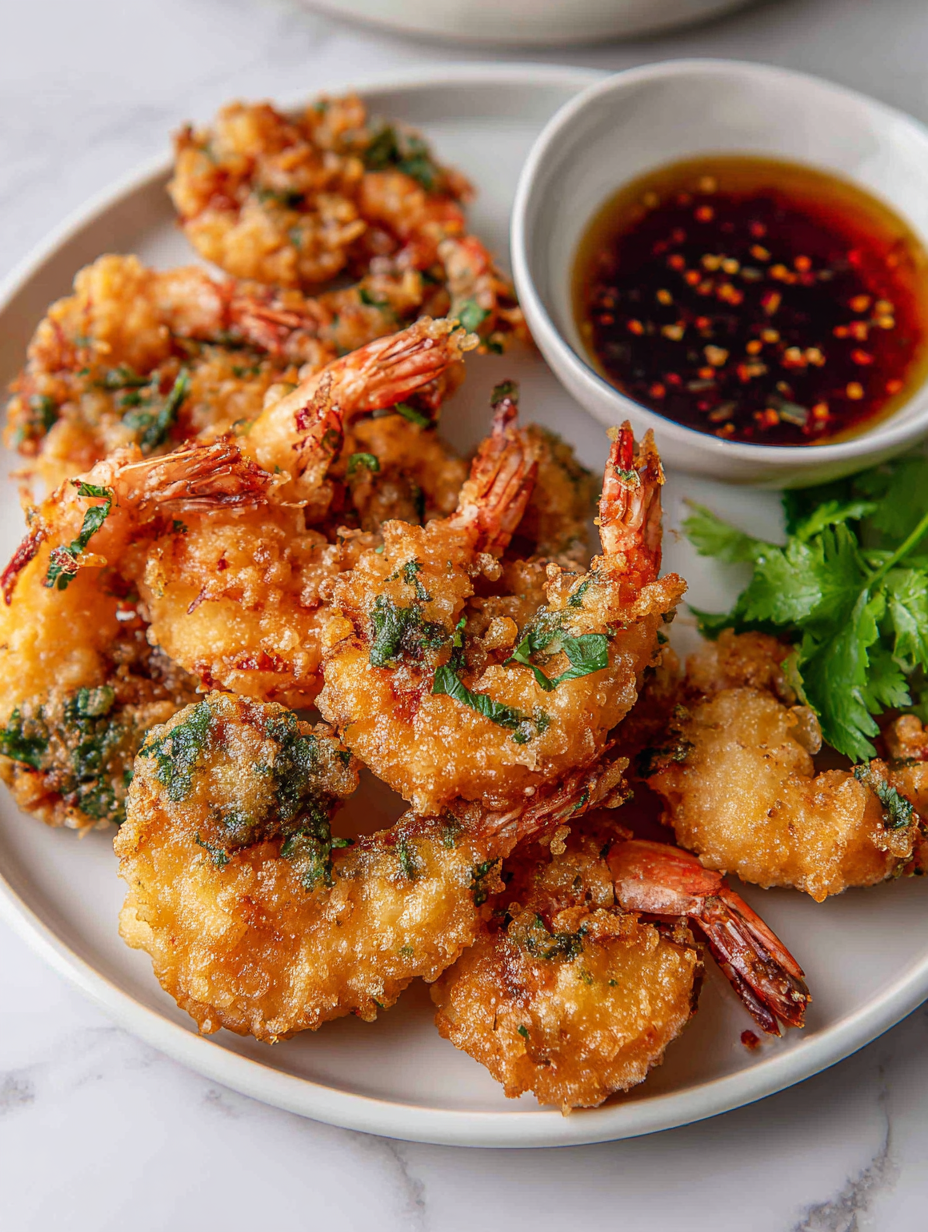
Prawn Tempura
Ingredients
Equipment
Method
- Set up your frying station with a deep-fry thermometer, a large pan filled with about 5 cm of oil, and a wire rack lined with paper towels. This setup helps keep the tempura crispy and prevents overcrowding.
- Prepare the batter by whisking together the tempura flour, rice flour (if using), and a pinch of salt in a bowl. Add the ice-cold water and gently mix just until combined—lumps are okay. The batter should be cold and slightly lumpy to maximize puffiness during frying.
- Peel and devein the prawns, leaving the tails on for easy handling. Pat them dry thoroughly with paper towels to remove excess moisture, which can cause sogginess.
- Heat the oil over medium-high heat until the thermometer reads 170°C (340°F). Test the temperature by dropping a small spoonful of batter into the oil; it should sizzle immediately and rise within 2-3 seconds, forming bubbles around it.
- Dip each prawn into the batter, allowing excess to drip off gently. Carefully lower the battered prawns into the hot oil, placing them apart to avoid sticking. Fry in batches for 2–3 minutes, turning occasionally, until the shells are golden and puffed, and the prawns are opaque and firm.
- Monitor the oil temperature during frying, adjusting the heat as needed to keep it steady at around 170°C. If the batter browns too quickly, lower the heat slightly; if it remains pale, increase it.
- Once cooked, use tongs to transfer the prawns onto the wire rack to drain excess oil and rest for about 1 minute. This helps maintain crispness and prevents sogginess.
- Serve the hot tempura immediately, garnished with lemon or lime wedges for a bright, fresh contrast. Enjoy the airy crunch with the tender, juicy prawns inside.
Top tempura frying tips
- Bolded mini-head: Keep batter cold → Use ice-cold water to create a puffier, lighter coating that resists absorbing oil.
- Bolded mini-head: Don’t overmix → Mix just until combined; a few lumps keep the batter airy and prevent gluten development.
- Bolded mini-head: Oil at right temp → Use a thermometer and aim for 170°C (340°F); too hot burns batter, too cool sogginess.
- Bolded mini-head: Test with a small drop → Ensure batter sizzles and rises within 2 seconds for perfect crispness.
- Bolded mini-head: Fry in small batches → Avoid overcrowding; maintain oil temperature and allow prawns space to crisp up.
- Bolded mini-head: Drain properly → Rest prawns on a wire rack for 1 minute to let excess oil drip and keep crunch intact.
- Bolded mini-head: Serve immediately → Tempura is best enjoyed right out of the fryer while it’s still crackling and golden.
Common tempura frying mistakes and fixes
- FORGOT to check oil temperature → Use a thermometer, avoid guessing heat levels.
- DUMPED batter into hot oil → Keep batter cold and handle gently to prevent splatters.
- OVER-TORCHED prawns → Maintain consistent oil temp; adjust heat to avoid burning batter.
- MISSED resting time for batter → Rest batter for 10 minutes for better puffiness and adhesion.
Quick fixes and pantry swaps
- When batter is too thick → Splash in a little ice water, stir gently.
- If oil shimmers but doesn’t crackle → Increase heat slightly, but watch closely.
- Splash oil when frying → Use tongs or a slotted spoon to prevent splattering.
- DUMPED batter into cold oil → Drop small spoonfuls gently to avoid splatters.
- When tempura is soggy → Patch with a quick blast in the oven at 180°C (350°F) for 3-5 minutes.
Prep, store, and reheat tips
- Prep prawns: devein and pat dry a day ahead, kept covered in the fridge; ensures they stay firm and fresh.
- Prepare batter: mix and refrigerate for up to 2 hours; keeps it cold and ready for crisp frying.
- Fry in batches: cook prawns and let cool completely before storing, so the tempura stays crisp longer.
- Storage: keep fried tempura in an airtight container at room temp for up to 1 hour; for longer, refrigerate for 1-2 days but expect some loss of crunch.
- Reheating: oven at 180°C (350°F) for 5-8 minutes; crisp up again and regain that airy crunch. Avoid microwave, it turns soggy and limp.
Common Questions about Prawn Tempura
1. How do I choose the best prawns?
Use large, fresh prawns with a slight bounce when pressed; fresh prawns are key for juicy bites.
2. Why is cold batter important?
Keep your batter ice-cold, ideally with ice cubes in the water, to help it puff up and stay light.
3. What’s the perfect oil temperature?
Aim for oil around 170°C (340°F); use a thermometer to avoid burning the batter or sogginess.
4. How many prawns should I fry at once?
Fry small batches to prevent temperature drops; prawns should turn a golden, crispy color within 2-3 minutes.
5. How do I know when the oil is hot enough?
Test the batter by dropping a small amount into the oil—if it sizzles and rises quickly, it’s ready.
6. Should I drain the tempura after frying?
Let the tempura rest on a wire rack for a minute before serving to keep it crispy and avoid sogginess.
7. How can I make my tempura extra crispy?
For extra crunch, add a touch of cornstarch to your batter or use rice flour instead of wheat flour.
8. Can I make tempura ahead of time?
Serve the tempura immediately to enjoy the crunch; if needed, reheat in a 180°C (350°F) oven for a few minutes.
9. How do I prepare prawns properly?
Ensure prawns are deveined and patted dry; excess moisture makes the batter soggy and less puffy.
10. Why is overcrowding a problem when frying?
Avoid overcrowding the pan to keep the oil temperature steady and ensure even, crispy frying.
There’s something quietly satisfying about pulling a batch of tempura prawns from the oil, hearing that crackle as they hit the plate. It’s a reminder that simple techniques, done with care, can turn everyday ingredients into something special. When the batter puffs up just right and the prawns stay juicy inside, I feel like I’ve cracked a little secret in my kitchen.
This dish is a small celebration of balance—light batter, perfect oil temp, fresh seafood—and right now, that feels especially needed. It’s honest, unpolished, and a little messy, just like good cooking should be. But in every crispy bite, there’s a quiet confidence that comes from knowing you’ve nailed the basics.

Hi, I’m Emily Carter, the creator and recipe developer behind Salt Strategist. I’m so happy you’re here. This blog is where my love for flavor, creativity, and thoughtful cooking comes together in one beautiful, ever evolving space.