
There’s something about the way pork ribs caramelize over high heat that gets me every time. It’s that slow build of smoky, sweet aroma that fills the kitchen, making the whole house smell like a backyard BBQ even if I’m just firing up the oven. Achieving that perfect sticky glaze feels like a small victory, a dance between patience and heat control, especially when you want that glossy, irresistible crust to form just right.
I’ve always loved the chaos of the caramelization process—watching the sugars bubble and turn amber, smelling the rich, smoky scent that hints at deep flavor. It’s a messy, sticky process but so worth it when those ribs come out oven-glazed and tender, with a sheen that makes your fingers sticky and your face grin. This recipe is my go-to whenever I want to recreate that late-night, smoky BBQ magic without needing a grill or hours of tending coals.
Cooking ribs this way isn’t just about the end flavor—it’s about the process, the little moments of watching the glaze thicken and the meat tenderize. It’s honest, unpolished, and deeply satisfying. Perfect for those weekends when you crave something rich, sticky, and full of flavor that sticks with you long after the last bite.
Focusing on the caramelization process, this recipe emphasizes achieving a perfect sticky glaze that balances smoky sweetness with tender pork, inspired by late-night BBQ sessions where the ribs become a glossy, irresistible mess.
The secret to glossy, sticky ribs
- I remember the first time I managed to get that perfect sticky glaze—my kitchen smelled like a smoky dream, and I felt like a pitmaster in my own right.
- There’s a rush of nostalgia whenever I see the glossy shine on these ribs, reminding me of summer nights spent around a fire with friends.
- Honestly, I love the chaos of sticky fingers and smoky air—it’s messy but so satisfying when those ribs are done just right.
- Sometimes I get a little proud watching that caramelized crust form, feeling like all the patience in the world paid off.
- Cooking these ribs takes me back to family barbecues, where the simple joy of sharing good food brought everyone close.
The story behind this recipe
- I once spent an entire afternoon experimenting with different glaze recipes, trying to get that perfect sticky, shiny coat that would make the ribs irresistible. The kitchen was a mess of sugar, soy, and fiery smells, but when those ribs finally came out, glossy and caramelized, I felt a quiet pride. It’s that moment, standing over a hot pan, that made me realize how much I love chasing that perfect balance of sweet and smoky in my own kitchen.
- This recipe is born from late-night cravings and a desire to bottle that smoky, sticky magic I get from proper BBQ joints. I’ve always found that the best ribs are about patience—letting the sugars caramelize slowly, watching the glaze thicken just right. It’s not about perfection, but about the small wins—the crackle of sugar turning amber, the scent of smoky sweetness filling the air, the sticky fingers that come with every bite.
- heading
- story_type
Trivia and Origins
- Sticky pork ribs have roots in Southern barbecue traditions, where slow-cooked, glazed meats became a festive staple.
- The caramelized glaze often includes ingredients like honey, molasses, or brown sugar, which were historically used for preservation and flavor.
- In some Asian cuisines, similar sticky ribs are cooked with soy, ginger, and garlic, showcasing a global love for sweet-savory pork dishes.
Ingredient breakdown: key components
- Pork ribs: I look for marbled ribs with a good fat cap—more flavor and tenderness when cooked slow. Swap with chicken thighs if you want easier cleanup, but the flavor won’t be as rich.
- Soy sauce: It gives the glaze a salty, umami punch that balances the sweetness. Use tamari for gluten-free, but then the glaze might be a tad less vibrant.
- Brown sugar: I love the deep caramel flavor it adds—use coconut sugar for a subtler taste, but keep an eye on the caramelization to avoid burning.
- Honey: The sticky, floral sweetness helps create that glossy crust. Maple syrup can work in a pinch, but it’ll bring a different, more herbal note.
- Garlic: Fresh minced garlic releases that pungent aroma and deep flavor. Dried garlic powder? It’s a quick fix, but it won’t have the same punch during cooking.
- Apple cider vinegar: Brightens the glaze with a zing that cuts through the richness. Lemon juice is an okay substitute, but it’s sharper and less mellow.
- Chili flakes: I add just a pinch for warmth, but go heavier if you want a smoky kick. Smoked paprika can replace it for a more rounded smoky flavor.
Spotlight on key ingredients
Pork Ribs:
- I pick ribs with marbled fat for juiciness; the fat melts during slow roasting, enriching every bite.
- Look for ribs with a deep, pinkish hue—less pale means fresher meat—ensuring a richer flavor and tender texture.
Soy Sauce:
- It adds a salty, umami depth that balances sweetness; the salty punch intensifies as it cooks, making the glaze vibrant.
- Use good-quality soy for a richer, more complex flavor; low-sodium versions help control saltiness if needed.
Notes for ingredient swaps
- Pork Ribs: I prefer baby back ribs for tenderness, but spare ribs give a meatier, more robust flavor. Swap with chicken thighs if you want a leaner, quicker option, though the glaze might not cling as richly.
- Soy Sauce: It adds that salty umami punch. Tamari is a gluten-free alternative, with a slightly less sharp flavor but similar richness.
- Brown Sugar: Deepens the caramel flavor. Coconut sugar can be used for a subtler sweetness, but keep a close eye to prevent burning during caramelization.
- Honey: Creates that glossy, sticky crust. Maple syrup can substitute, but it’ll bring a more floral, less smoky sweetness.
- Garlic: Fresh garlic gives a pungent, aromatic punch. Garlic powder can be a quick fix, but it lacks the depth of fresh cloves during cooking.
- Apple Cider Vinegar: Brightens the glaze with a mellow acidity. Lemon juice works in a pinch, but it’s sharper and less rounded in flavor.
- Chili Flakes: For warmth, use more chili or smoked paprika for a smoky kick. Both will add depth without overpowering the glaze.
Equipment & Tools
- Oven: For even, controlled cooking and caramelization.
- Baking sheet with rack: To hold the ribs and allow heat to circulate for even cooking.
- Basting brush: To apply the glaze evenly during baking.
- Kitchen tongs: To handle hot ribs safely and turn them as needed.
- Meat thermometer: To check internal temperature for doneness.
Guide to Perfect Sticky Ribs
- Preheat your oven to 150°C (300°F). Gather a large baking dish or sheet with a rim to catch drips.
- Prepare the ribs: remove the silver skin from the back if still attached. Cut into manageable sections if large, about 4-6 ribs per piece.
- Mix your glaze: in a bowl, combine soy sauce, honey, brown sugar, garlic, apple cider vinegar, and chili flakes. Stir until smooth and shiny.
- Lay the ribs on a baking rack or directly on the baking sheet lined with foil. Brush generously with half of the glaze, ensuring all surfaces are coated.
- Bake uncovered for 2.5–3 hours. The meat should be tender and almost falling off the bone. Baste every 30 minutes with remaining glaze for extra stickiness.
- During the last 20 minutes, increase oven temperature to 200°C (390°F) or switch to broil. Watch closely, the glaze should bubble and form a crackly, caramelized crust.
- Check for doneness: ribs should be juicy, with a deep, glossy glaze. The meat should jiggle slightly when moved, and edges may be slightly charred.
- Remove from oven and let rest for 5 minutes. Resting helps juices redistribute, keeping ribs moist and tender.
- Serve hot, with extra glaze brushed on top or on the side for dipping. The surface should be sticky and caramelized, with a smoky aroma.
Let the ribs rest on a cutting board for 5 minutes. Then, slice between bones, plate, and brush with any remaining glaze for extra shine.
How to Know It’s Done
- Ribs are tender and meat pulls away easily when probed with a fork.
- Glaze is thick, glossy, and caramelized without burning edges.
- Internal temperature reaches about 70°C (160°F) for fully cooked pork.
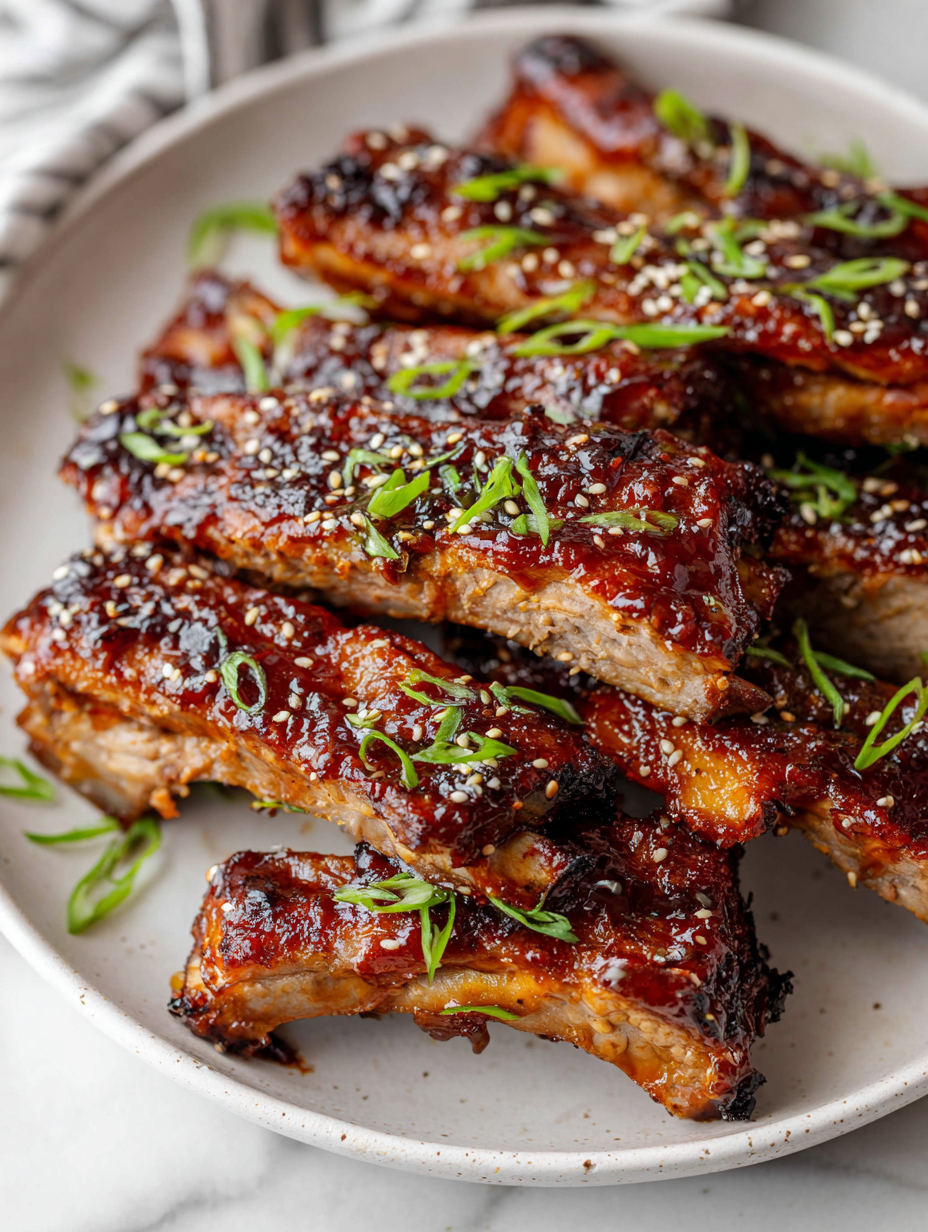
Sticky Caramelized Pork Ribs
Ingredients
Equipment
Method
- Preheat your oven to 150°C (300°F). Line a baking sheet with foil and place a rack on top to allow heat circulation.
- Remove the silver skin from the back of the ribs if it's still attached, then cut the racks into smaller sections for easier handling.
- In a bowl, whisk together soy sauce, honey, brown sugar, minced garlic, apple cider vinegar, and chili flakes until the mixture is smooth and shiny.
- Lay the ribs on the prepared rack, then brush generously with half of the glaze, making sure to coat all sides evenly.
- Bake the ribs uncovered for about 2.5 to 3 hours, basting with the remaining glaze every 30 minutes to build layers of sticky sweetness.
- Once the meat is tender and almost falling off the bone, increase the oven temperature to 200°C (390°F) or switch to broil, and cook for an additional 15-20 minutes, watching closely so the glaze bubbles and caramelizes into a glossy crust.
- Check that the ribs are beautifully caramelized and glossy. Insert a meat thermometer into the thickest part; they should read about 70°C (160°F).
- Remove the ribs from the oven, let them rest for 5 minutes to allow the juices to redistribute, then slice between the bones.
- Serve the ribs hot, drizzled with any remaining glaze or extra sauce on the side for dipping.
Tips for sticky, glossy ribs
- BOLD GLAZE: Apply a generous, even coat of glaze to build sticky layers that caramelize beautifully.
- HIGH HEAT: Finish under the broiler or increase oven temp to 200°C (390°F) for that crackly, glossy crust.
- SLOW BASTE: Reapply glaze every 30 minutes during baking to deepen flavor and enhance stickiness.
- WATCH THE SUGAR: Keep an eye on the caramelization; if it starts to smoke or burn, reduce heat slightly.
- USE A RACK: Elevate ribs on a wire rack to allow heat circulation and prevent soggy bottoms.
- REST BEFORE SLICING: Let the ribs sit for 5 minutes after baking to retain juices and finish glazing.
- TOOL UP: A silicone brush and meat thermometer are your best friends for even application and perfect doneness.
Common mistakes and how to fix them
- TOO MUCH SAUCE: Wipe excess glaze to prevent burning and achieve a glossy finish.
- UNDER-COOKED: Extend baking time or check internal temp; pork should reach 70°C (160°F).
- DRY RIBS: Cover with foil if they start to dry out during baking.
- SOGGY GLAZE: Increase oven temp at the end to caramelize and crisp the surface.
Fast fixes for sticky mishaps
- When glaze burns, splash with a little water and lower oven temp immediately.
- If ribs stick, give them a gentle nudge with a spatula—avoid tearing the meat.
- DUMPED too much sugar? Rinse ribs quickly and start fresh with new glaze.
- Over-torched glaze? Shield ribs with foil and finish at lower heat for even caramelization.
- If sauce is too thin, simmer it on the stove for 5 minutes until thickened, then brush on.
Prep, store, and reheat tips
- You can prep the ribs up to a day in advance—apply the glaze, wrap tightly, and store in the fridge. The flavors deepen overnight, making the final bake even more flavorful.
- Store cooked ribs in an airtight container in the fridge for up to 3 days. Reheat gently in the oven at 150°C (300°F) until warmed through, about 15-20 minutes, until the glaze is sticky and sizzling.
- Reheating may cause the glaze to lose some of its shine; brush on a little extra honey or soy before reheating for added gloss and moisture.
- For longer storage, ribs can be frozen for up to 1 month. Thaw overnight in the fridge, then reheat with a quick brush of glaze to restore that sticky surface.
Top questions about sticky pork ribs
1. How do I choose the right ribs?
Look for ribs with a good amount of marbling and a pink hue for the best flavor and tenderness. Swap with chicken thighs if you prefer a leaner, quicker option, but expect a different flavor profile.
2. Can I substitute soy sauce?
Soy sauce adds umami richness and saltiness. If you’re gluten-free, tamari works well. Use a good-quality soy for a deeper flavor, but lower-sodium options are fine if you watch the salt.
3. What’s a good substitute for brown sugar?
Brown sugar provides deep caramel notes. You can use coconut sugar for a subtler sweetness, but keep an eye on the caramelization to prevent burning.
4. Can I replace honey?
Honey creates a shiny, sticky crust. Maple syrup can be used as an alternative, but it will add a more herbal, less smoky sweetness.
5. What’s the best garlic option?
Fresh garlic releases a pungent, aromatic flavor during cooking. Garlic powder is a quick fix, but it won’t develop the same depth as fresh cloves.
6. Is lemon juice a good substitute?
Apple cider vinegar adds brightness and cuts through the richness. Lemon juice can work in a pinch, but it’s sharper and less mellow.
7. How do I adjust spice levels?
Chili flakes add warmth and a slight kick. Smoked paprika can replace them for a smoky flavor without heat, enhancing the caramelization.
8. What’s the ideal cooking method?
Cooking at a low temperature for several hours allows the ribs to become tender and absorb the flavors of the glaze. Finish with a high heat to caramelize the surface for that glossy crust.
9. Why rest the ribs before serving?
Rest the ribs for about 5 minutes after baking. This helps juices redistribute and keeps the meat moist when sliced.
10. What if the glaze burns?
If the glaze starts to burn, lower the oven temp or shield the ribs with foil. For a quick fix, splash some water on the glaze and continue baking.
There’s something about that sticky, caramelized crust on pork ribs that sticks with you long after the last bite. It’s a messy, satisfying process that’s worth every sticky finger and smoky aroma filling the air. This recipe is a small reminder that sometimes, the best flavors come from patience and a little bit of chaos in the kitchen.
When those ribs come out glossy and tender, with that perfect balance of smoky sweetness, it’s hard not to feel a quiet pride. They’re not just food, but a story of caramelization, heat control, and the joy of making something deeply flavorful from scratch. Each time I make these, I remember why I love cooking—messy, imperfect, and always worth it.

Hi, I’m Emily Carter, the creator and recipe developer behind Salt Strategist. I’m so happy you’re here. This blog is where my love for flavor, creativity, and thoughtful cooking comes together in one beautiful, ever evolving space.


