
Focusing on crispy skin salmon isn’t just about getting that perfect crackle—it’s a quiet ritual that turns cooking into a tactile meditation. I’ve found that the process of patiently drying the fish, feeling the temperature of the pan, and hearing that initial sizzle creates a small, satisfying moment of mindfulness in an otherwise hectic kitchen.
This approach is about more than just texture; it’s about honoring the fish’s natural richness with a simple, almost reverent technique. When the skin crisps up with that deep, golden hue and a slight shimmer, it feels like a quiet victory, a reminder that good things often come from slow, deliberate effort.
Focusing on achieving the perfect crispy skin with a minimal, almost ritualistic approach that turns the process into a meditative act, emphasizing the tactile and sensory experience over just the end result.
The tactile joy of crispy skin
- Getting that initial sizzle right feels like a small, triumphant secret I hold in the kitchen.
- There’s a meditative calm in patiently drying the salmon skin—it’s become my go-to ritual before dinner.
- I love how the crispy skin ignites a burst of joy with every bite, especially when paired with something bright like lemon.
- Sometimes I mess up and forget to score the skin—then I remember why patience and prep are everything.
- That moment when the skin crackles loudly in the pan, I feel a tiny rush of pride, like I’ve cracked a culinary code.
The story behind this recipe
- Crispy skin salmon became my obsession after a failed attempt at a fancy poached version. I kept returning to the pan, trying to master that crackling, golden layer that seemed almost magical when done right.
- One evening, I remembered my grandmother’s simple method—patience, dry skin, and a hot pan. That moment, hearing the sizzle and seeing that perfect shimmer, felt like rediscovering a lost craft, something primal and satisfying.
- It’s funny how a small change—like drying the fish thoroughly—can turn the whole thing around. Now, crispy skin isn’t just a technique; it’s a quiet act of care that makes the whole meal feel special.
Crispy Skin Salmon Trivia
- Crispy skin salmon gained popularity in Japanese cuisine, where the technique emphasizes texture contrast and visual appeal.
- Historically, chefs discovered that removing excess moisture from the skin before cooking dramatically improved crispiness, a tip passed down through professional kitchens.
- The practice of scoring or drying salmon skin to enhance crispness has roots in Scandinavian smoking and curing traditions, adapted for modern pan-searing.
- In some regions, crispy fish skin was once considered a delicacy, served as a snack or garnish, highlighting its cultural value beyond the main dish.
Ingredient breakdown
- Salmon fillet: I prefer skin-on for that crispy contrast, but make sure it’s dry—moisture is the enemy here, so pat it well with paper towels before hitting the pan.
- Salt: A generous pinch on the skin helps draw out moisture and enhances crispiness—don’t skimp, but avoid oversalting the flesh itself.
- Oil: I use a high-smoke-point oil like grapeseed or clarified butter; the key is a thin, even coat that shimmers in the pan and crackles when it hits hot skin.
- Lemon: Bright, zesty lemon juice at the end lifts the richness and adds a fresh bite—squeeze just before serving so it’s not muted by heat.
- Herbs: A sprig of thyme or dill can add a subtle aroma, but I often skip for pure, unadulterated fish flavor—your call, really.
- Scoring: Lightly score the skin if it’s thick or uneven—this helps render fat and promotes even crisping, especially if the fillet is large or thick.
Spotlight on key ingredients
Salmon fillet:
- I look for firm, bright flesh with a slight sheen. The skin should be dry and free of scales—moisture is the enemy of crispness.
- Salt: Coarse sea salt or kosher salt helps draw moisture from the skin, creating that satisfying crackle and deep flavor. Be generous but controlled.
- Oil: Grape seed or clarified butter—high smoke point and neutral enough to promote even browning without smoking or burning, adding a glossy, crackling finish.
Lemon and herbs:
- Lemon: Bright, zesty lemon juice at the end lifts the richness and adds a clean, fresh bite—squeeze just before serving for maximum impact.
- Herbs: Fresh thyme or dill bring a subtle aroma; herbs can be skipped if you want pure fish flavor, but a sprig or two adds a nice touch.
- Scoring: Lightly score the skin if thick or uneven—this helps render fat, prevents curling, and ensures even crisping for that perfect crack.
Notes for ingredient swaps
- Salmon: Wild-caught vs. farmed — wild has a firmer texture and richer, more complex flavor, but farmed is usually more consistent and affordable.
- Salt: Kosher salt or sea salt — both work well for seasoning, but kosher salt flakes are larger and easier to control for even salting.
- Oil: Grapeseed or clarified butter — these high-smoke-point oils give a crispier skin and a clean, neutral flavor; olive oil can work but may burn faster.
- Lemon: Lemon juice or lime — lime adds a slightly different tang, and bottled lemon juice is a decent shortcut if fresh isn’t available, but fresh is always better.
- Herbs: Dill, thyme, or parsley — fresh herbs add aroma; dried can be used but won’t have the same bright, vibrant punch. Use sparingly if dried.
- Scoring: Crosshatch or single-line — scoring helps render fat evenly; skip if your fillet is thin or already well-trimmed, but don’t forget to dry the skin thoroughly.
Equipment & Tools
- Heavy skillet (cast iron preferred): Provides even heat and helps achieve crisp skin.
- Paper towels: Drys the fish thoroughly for better crisping.
- Sharp knife: Scores the skin evenly to prevent curling and promote rendering.
- Spatula: Helps press the fish and flip if needed.
Step-by-step guide to pan searing
- Start by patting the salmon fillet dry with paper towels—no moisture, no mess, no steam. Let it sit uncovered for 10 minutes if possible; the drier, the better.
- Score the skin lightly with a sharp knife in 2-3 places, about 1/4 inch apart, to help fat render and prevent curling.
- Season generously with salt on the skin side. No need for much on the flesh—just a light sprinkle.
- Heat a heavy-bottomed skillet (preferably cast iron) over medium-high heat until it’s just shy of smoking, around 200°C / 390°F. Add a thin film of high-smoke-point oil, like grapeseed, and let it shimmer.
- Carefully place the salmon, skin side down, into the hot pan. Press gently with a spatula for 10 seconds to prevent curling. You should hear a loud crackle immediately.
- Cook without moving for 4-6 minutes, depending on thickness. The skin should turn a deep golden-brown and become crisp—check by gently lifting a corner.
- If the skin isn’t crisp enough, turn the heat up slightly for the last minute. For very thick fillets, flip and cook flesh side for 1-2 minutes, just to warm through.
- Once the skin is crisp and the flesh is opaque about 2/3 of the way up, remove from heat. Let rest for 2 minutes—residual heat will finish cooking the flesh.
- Finish by squeezing fresh lemon over the top and adding herbs if desired. Plate immediately for maximum crunch and freshness.
Let the salmon rest for 2 minutes off heat to settle juices. Finish with lemon and herbs, then serve immediately to enjoy the crispy skin at its best.
How to Know It’s Done
- The skin is deep golden and crackling loudly when pressed with a spatula.
- The flesh looks opaque and flakes easily when tested with a fork.
- The salmon releases easily from the pan without sticking or tearing.
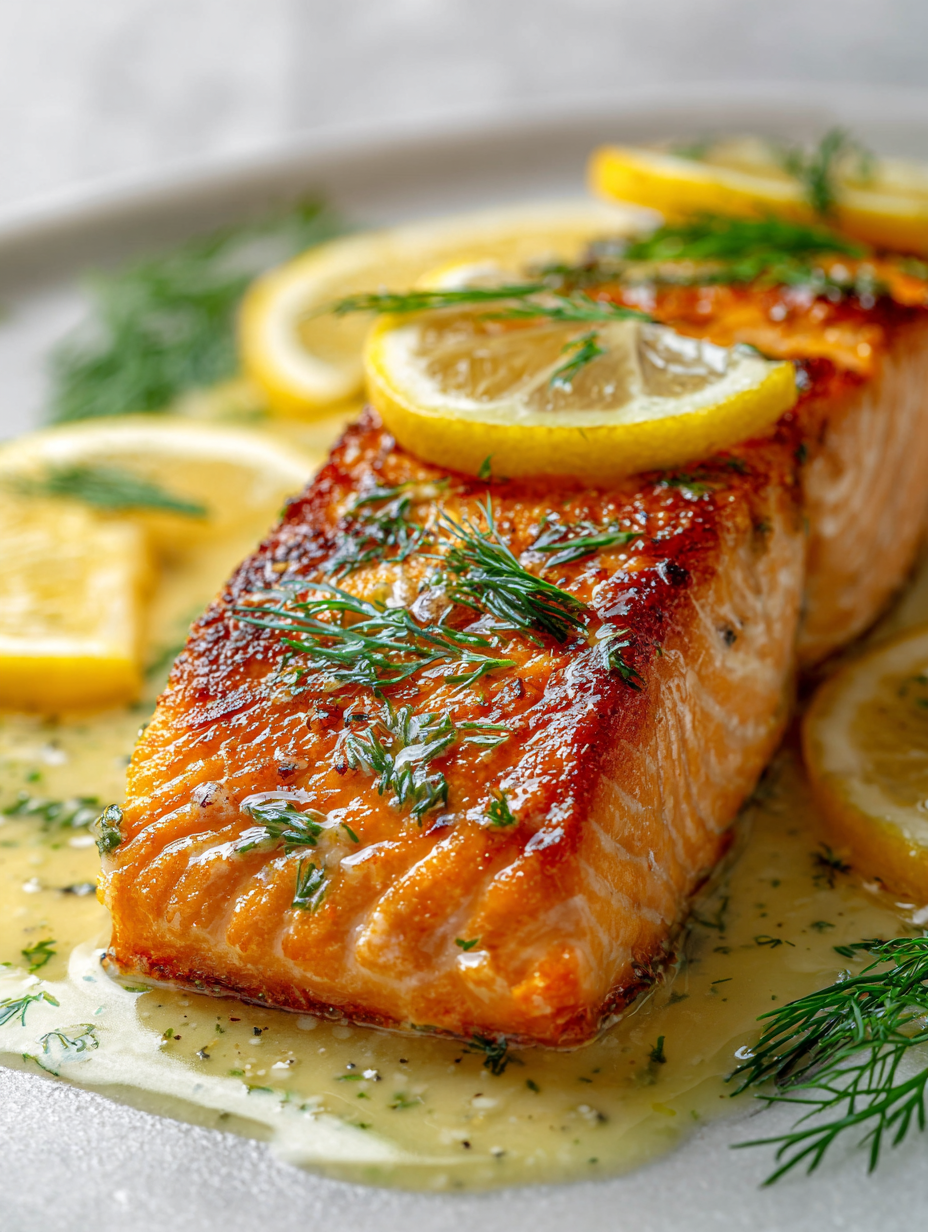
Crispy Skin Pan-Seared Salmon
Ingredients
Equipment
Method
- Gently pat the salmon fillets dry with paper towels, ensuring the skin is completely moisture-free. Let them sit uncovered for about 10 minutes if possible, to help dry out the skin for better crisping.
- Using a sharp knife, lightly score the skin of each fillet in 2-3 places, about 1/4 inch apart, to help render fat evenly and prevent curling during cooking.
- Sprinkle a generous pinch of coarse sea salt evenly over the skin side of each fillet; this draws out moisture and encourages a crispy crust. Lightly season the flesh with a small amount of salt if desired.
- Heat a heavy skillet, preferably cast iron, over medium-high heat until just shy of smoking—around 200°C or 390°F. Add a thin layer of high-smoke-point oil and let it shimmer and ripple, filling the kitchen with a faint nutty aroma.
- Carefully place the salmon fillets skin side down into the hot skillet, pressing gently with a spatula for about 10 seconds to ensure full contact and prevent curling. You should hear an immediate loud crackle as the skin hits the hot oil.
- Cook undisturbed for 4 to 6 minutes, watching the skin turn a deep golden-brown and crackle loudly. The flesh should start to turn opaque about 2/3 of the way up, indicating it's nearly done. If needed, press down gently again for even crisping.
- If the skin isn't quite crispy enough, turn up the heat slightly for the last minute, keeping a close eye to prevent burning. For thicker fillets, flip and sear the flesh side for 1-2 minutes to finish cooking through.
- Once the skin is deep golden and crackling, remove the salmon from the pan and let it rest for 2 minutes. This short pause allows the juices to settle and the skin to stay crisp.
- Squeeze fresh lemon juice over the hot salmon fillets, brightening the rich, crispy skin. Garnish with herbs if desired for an aromatic touch.
- Serve immediately, enjoying the satisfying crackle of the skin with each bite, complemented by the tender, flaky flesh inside.
Pro tips for crispy skin salmon
- Dry thoroughly: Pat the salmon skin completely dry with paper towels—moisture is the enemy of crispness.
- Start hot: Heat your pan until just shy of smoking, around 200°C / 390°F, for an immediate sizzle and crackle.
- Press down: Gently press the fish into the pan for 10 seconds after placing to ensure contact and even crisping.
- Avoid moving: Let the salmon cook undisturbed for 4-6 minutes, until the skin is deep golden and crackling loudly.
- Finish with lemon: Squeeze fresh lemon juice just before serving to brighten the rich, crispy fish.
- Control heat: If the skin darkens too quickly, reduce heat slightly; if not crisp enough, turn up heat in last minute.
- Rest briefly: Let the cooked salmon rest for 2 minutes off heat to allow juices to settle and skin to stay crisp.
Common mistakes and how to fix them
- FORGOT to dry the fish thoroughly → Pat dry and air-dry for better crispness.
- DUMPED oil into pan while hot → Add oil carefully, swirl to coat evenly, avoid splatters.
- OVER-TORCHED the skin → Reduce heat immediately if it darkens too fast, prevent burning.
- MISSED scoring the skin → Score lightly to help render fat and prevent curling.
Quick fixes and pantry swaps
- IF skin isn’t crisp, splash a little more oil and turn heat higher for 30 seconds.
- WHEN fish sticks, gently lift and pat dry again—moisture is the crisp killer.
- PATCH a crackling skin by pressing it back down—crackle returns instantly if pan’s hot enough.
- WHEN oil shimmers, rescue burnt bits quickly—swap to fresh oil or reduce heat immediately.
- SHIELD dull skin by adding a splash of lemon juice—brightens and restores that glossy crackle.
Prep, store, and reheat tips
- Dry the salmon skin thoroughly with paper towels before storing; excess moisture hampers crisping later.
- Wrap the fillet tightly in plastic wrap or foil and store in the fridge for up to 24 hours—preferably use within that window for best texture.
- For longer storage, freeze the salmon wrapped well in airtight packaging; it maintains quality for about 2 months but may lose some flavor and texture upon thawing.
- Reheat leftovers gently in a hot skillet or oven; avoid microwave to preserve crispiness. Expect the skin to soften slightly, so re-crisp in a hot pan for 1-2 minutes if needed.
- Freshly cooked salmon is best enjoyed immediately, but if refrigerated, bring to room temperature before reheating to help preserve texture and flavor.
Top questions about crispy skin salmon
1. How important is drying the salmon skin?
Make sure the skin is completely dry before cooking; moisture prevents crispiness and causes splattering.
2. Which oil works best for crispy skin?
Use a high-smoke-point oil like grapeseed or clarified butter to prevent burning and promote crackling.
3. How hot should the pan be?
Start with a hot pan—around 200°C / 390°F—so the skin crackles immediately on contact.
4. Should I press down on the salmon?
Press the fish gently into the pan for 10 seconds after placing it to ensure full contact and even crisping.
5. How long do I cook the salmon skin side down?
Cook without moving it for 4-6 minutes until the skin is deep golden and crackling loudly.
6. What if the skin burns or isn’t crispy enough?
If the skin darkens too quickly, reduce the heat; if not crispy enough, turn up the heat at the end.
7. Should I rest the salmon after cooking?
Let the salmon rest for 2 minutes off heat to allow juices to settle and skin to stay crispy.
8. Is scoring the skin necessary?
Use a sharp knife to score the skin lightly; this helps render fat and prevents curling.
9. Can I cook the flesh side too?
For extra crispness, finish cooking the flesh briefly by flipping the fillet and searing for 1-2 minutes.
10. How do I reheat crispy salmon without losing crunch?
Reheat leftovers gently in a hot pan or oven, and re-crisp the skin by briefly pan-frying before serving.
Mastering crispy skin salmon isn’t just about technique; it’s about embracing patience and paying attention to every sizzling moment. When that skin crackles loudly and turns a deep, golden hue, it’s a small celebration of simple, mindful cooking.
In a world that moves fast, this dish reminds me to slow down and enjoy the tactile joy of crisping fish—every step, from drying to resting, is a quiet act of care that makes the meal feel truly special.

Hi, I’m Emily Carter, the creator and recipe developer behind Salt Strategist. I’m so happy you’re here. This blog is where my love for flavor, creativity, and thoughtful cooking comes together in one beautiful, ever evolving space.


