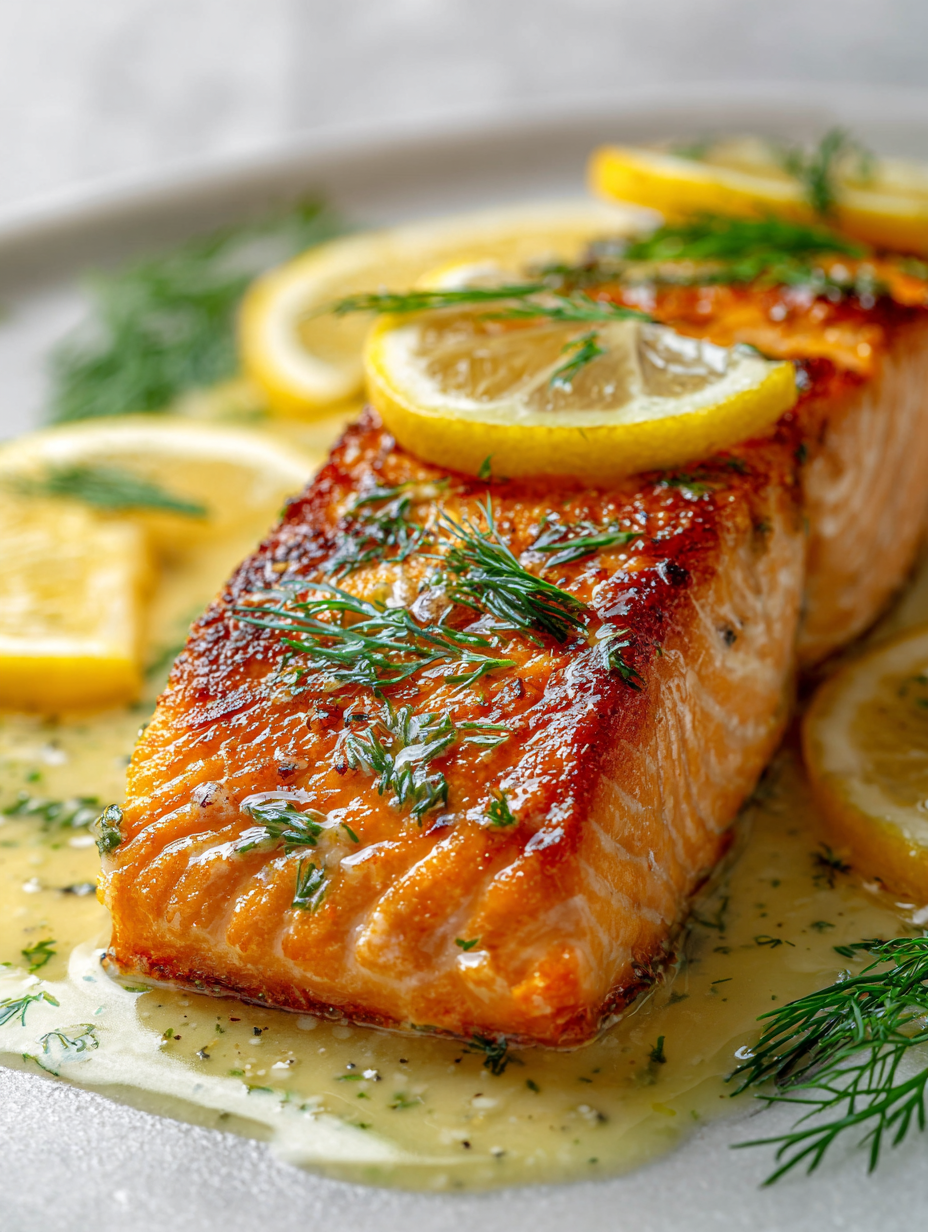
Gently pat the salmon fillets dry with paper towels, ensuring the skin is completely moisture-free. Let them sit uncovered for about 10 minutes if possible, to help dry out the skin for better crisping.
Using a sharp knife, lightly score the skin of each fillet in 2-3 places, about 1/4 inch apart, to help render fat evenly and prevent curling during cooking.
Sprinkle a generous pinch of coarse sea salt evenly over the skin side of each fillet; this draws out moisture and encourages a crispy crust. Lightly season the flesh with a small amount of salt if desired.
Heat a heavy skillet, preferably cast iron, over medium-high heat until just shy of smoking—around 200°C or 390°F. Add a thin layer of high-smoke-point oil and let it shimmer and ripple, filling the kitchen with a faint nutty aroma.
Carefully place the salmon fillets skin side down into the hot skillet, pressing gently with a spatula for about 10 seconds to ensure full contact and prevent curling. You should hear an immediate loud crackle as the skin hits the hot oil.
Cook undisturbed for 4 to 6 minutes, watching the skin turn a deep golden-brown and crackle loudly. The flesh should start to turn opaque about 2/3 of the way up, indicating it's nearly done. If needed, press down gently again for even crisping.
If the skin isn't quite crispy enough, turn up the heat slightly for the last minute, keeping a close eye to prevent burning. For thicker fillets, flip and sear the flesh side for 1-2 minutes to finish cooking through.
Once the skin is deep golden and crackling, remove the salmon from the pan and let it rest for 2 minutes. This short pause allows the juices to settle and the skin to stay crisp.
Squeeze fresh lemon juice over the hot salmon fillets, brightening the rich, crispy skin. Garnish with herbs if desired for an aromatic touch.
Serve immediately, enjoying the satisfying crackle of the skin with each bite, complemented by the tender, flaky flesh inside.